BMW M2 Review: Specs, History, and Buying Tips
The BMW M2 is one of the smallest and most driver-focused cars in BMW’s modern M lineup. It combines a turbocharged inline-six engine, rear-wheel drive, compact dimensions, and a choice of manual or automatic transmissions in most standard versions.
Buy an original 2016–2018 M2 if you want a simpler and more playful experience. Choose the 2019–2021 M2 Competition if you want one of the strongest combinations of performance, value, and old-school M character. Consider the second-generation M2 if you prefer more power, newer technology, and a more substantial chassis.
The limited-production M2 CS models sit above the standard versions, but their higher prices make the most sense for collectors and drivers who will benefit from their track-focused upgrades.
This BMW M2 review covers U.S. models from 2016 through 2026, with a brief look at the upcoming 2027 M2 xDrive. It also explains the best years to consider, what reliability concerns to watch for, and how to inspect a used M2 before buying.
BMW M2 Generations and Specifications
The M2 has gone through two main generations. The first-generation F87 was sold in the United States from 2016 through 2021. The second-generation G87 arrived for the 2023 model year after a one-year gap.
| BMW M2 version | U.S. model years | Engine | Horsepower and torque | Transmissions | BMW 0–60 mph |
|---|---|---|---|---|---|
| Original M2 | 2016–2018 | 3.0L turbo inline-six, N55 | 365 hp, 343 lb-ft; 369 lb-ft with overboost | 6-speed manual or 7-speed DCT | 4.2 sec with DCT |
| M2 Competition | 2019–2021 | 3.0L twin-turbo inline-six, S55 | 405 hp, 406 lb-ft | 6-speed manual or 7-speed DCT | 4.0 sec with DCT |
| First M2 CS | 2020 | 3.0L twin-turbo inline-six, S55 | 444 hp, 406 lb-ft | 6-speed manual or 7-speed DCT | 3.8 sec with DCT |
| Second-generation M2 | 2023–2024 | 3.0L twin-turbo inline-six, S58 | 453 hp, 406 lb-ft | 6-speed manual or 8-speed automatic | 3.9 sec with automatic |
| Updated M2 | 2025–2026 | 3.0L twin-turbo inline-six, S58 | 473 hp; 406 lb-ft manual or 443 lb-ft automatic | 6-speed manual or 8-speed automatic | 3.9 sec with automatic |
| Second M2 CS | 2026 | 3.0L twin-turbo inline-six, S58 | 523 hp, 479 lb-ft | 8-speed automatic | 3.7 sec |
BMW’s official U.S. specifications confirm the progression from the 365-hp original M2 to the 405-hp Competition, 444-hp first-generation CS, 453-hp early G87, 473-hp updated M2, and 523-hp second-generation CS. For current performance figures, dimensions, and equipment, review the official BMW M2 specifications Acceleration varies by transmission, equipment, conditions, and test method.
How the BMW M2 Evolved
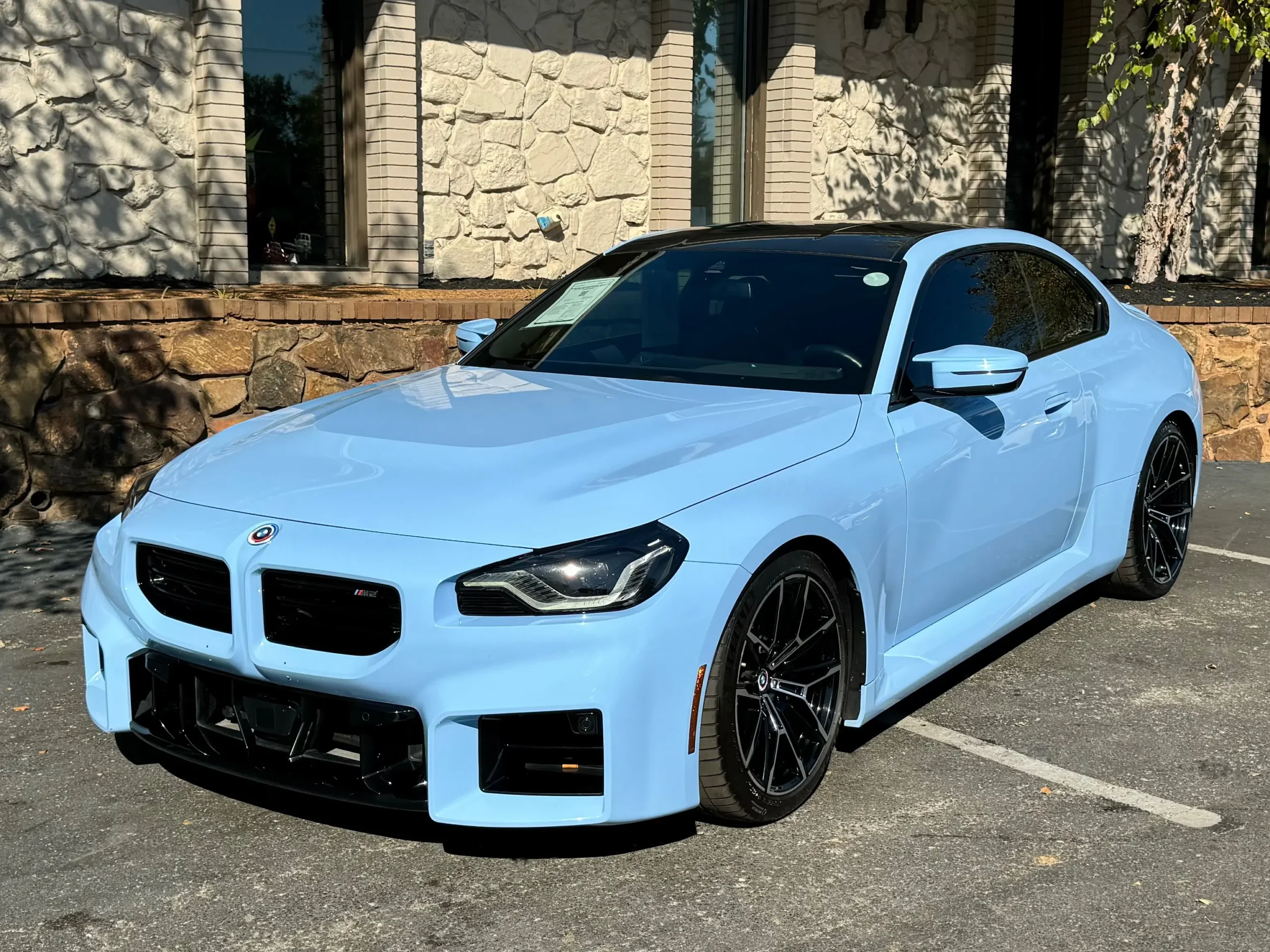
The M2 followed the formula established by the limited-production BMW 1 Series M Coupe: a powerful inline-six engine placed in a compact rear-wheel-drive coupe.
The Original BMW M2 Arrives for 2016
BMW launched the first M2 for the 2016 model year. It used the N55 turbocharged inline-six and offered either a six-speed manual transmission or a seven-speed dual-clutch transmission.
Its relatively compact size, wide body, and responsive chassis helped distinguish it from larger BMW M cars.
The M2 Competition Replaces the Original Model
The M2 Competition replaced the original M2 for 2019. Its S55 twin-turbo engine was related to the engine used in the contemporary M3 and M4.
BMW also added stronger cooling, larger brakes, increased front-end rigidity, and other changes intended to support the additional performance.
The First BMW M2 CS Raises the Performance Level
The first M2 CS followed for 2020. BMW increased output to 444 horsepower, added adaptive suspension, and used carbon-fiber-reinforced plastic for components including the roof and hood.
It was offered for one U.S. model year and could be ordered with either a six-speed manual transmission or a seven-speed DCT.
The Second-Generation G87 M2 Debuts for 2023
For 2023, BMW introduced the larger and more powerful G87 M2. The new generation adopted the S58 twin-turbo inline-six, an available eight-speed automatic transmission, a wider track, and a more technology-focused interior.
The six-speed manual remained available for buyers who preferred a more traditional driving experience.
The 2025 BMW M2 Receives More Power and Technology
BMW updated the standard M2 for 2025, raising output from 453 to 473 horsepower and increasing torque in automatic models to 443 lb-ft.
The update also introduced BMW Operating System 8.5, a new flat-bottom steering wheel, more paint choices, and the option to order M Carbon bucket seats separately from the full Carbon Package.
The 2026 BMW M2 CS Becomes the Most Powerful M2 Yet
The 2026 M2 CS brought another major performance increase. It produces 523 horsepower and 479 lb-ft of torque, uses an eight-speed automatic transmission, and remains rear-wheel drive.
BMW also reduced its weight by 97 pounds compared with an automatic standard M2 and added CS-specific suspension, braking, aerodynamic, and carbon-fiber components.
To learn how BMW developed its reputation for performance, engineering, and luxury, read our guide to the history of the BMW brand.
Which BMW M2 Should You Buy?
The best BMW M2 depends on whether you prioritize a smaller and simpler car, stronger performance, newer technology, or long-term collectibility.
Original BMW M2: Best for Simplicity and Character
The 2016–2018 M2 is the least powerful version, but that does not make it the least desirable.
Its N55 engine delivers strong low- and midrange power without making the car feel overwhelmed by its output. The compact F87 body and traditional rear-wheel-drive layout give it the lighter and more playful personality many buyers associate with the original M2 formula.
The original M2 is a good choice for someone who wants:
- A lower purchase price than most Competition or CS examples
- A six-speed manual or quick-shifting DCT
- A simpler version of the first-generation M2
- Strong road performance without needing the highest output
The 2018 model is especially appealing because it is the final year of the original M2. However, condition and service history still matter more than choosing a specific year.
BMW M2 Competition: Best All-Around Used Choice
For many used buyers, the 2019–2021 M2 Competition is the most attractive version of the lineup.
Its 405-hp S55 engine is noticeably stronger than the N55 in the original M2. BMW also gave the Competition improved cooling, larger brakes, added chassis bracing, and a more serious performance setup.
It retains the compact F87 body and offers both manual and DCT transmissions. That combination makes it an appealing middle ground between the more affordable original M2 and the considerably more expensive M2 CS.
Choose the M2 Competition if you want:
- More power and track capability than the original M2
- A manual transmission or dual-clutch automatic
- The smaller first-generation body
- Strong performance without paying CS prices
The main buying challenge is finding an example that has not been poorly modified, aggressively tuned, or heavily used on a track.
First-Generation M2 CS: Best for F87 Collectors
The 2020 M2 CS is the most specialized version of the first-generation car.
Its 444-hp S55 engine, adaptive suspension, carbon-fiber components, and limited U.S. availability make it desirable to collectors. It also offers something the newer M2 CS does not: a six-speed manual transmission.
However, the CS normally costs much more than an M2 Competition. Buyers should decide whether rarity, originality, and collector potential justify the premium.
A modified, damaged, or poorly documented CS may be less desirable than a clean and well-maintained M2 Competition.
2023–2024 BMW M2: Best Entry Point Into the G87
The 2023 and 2024 M2 introduced the second-generation platform with 453 horsepower, a six-speed manual, and an available eight-speed automatic.
These years may become appealing used values as newer 473-hp models enter the market. They deliver most of the G87 experience, including the S58 engine, modern interior, wide track, and newer chassis.
The main compromise is that they do not receive the extra 20 horsepower or interior updates introduced for 2025.
The styling is also more angular than the F87, and the G87 is larger and heavier. Buyers who want the smallest-feeling M2 may still prefer the first generation.
2025–2026 BMW M2: Best Standard G87 Models
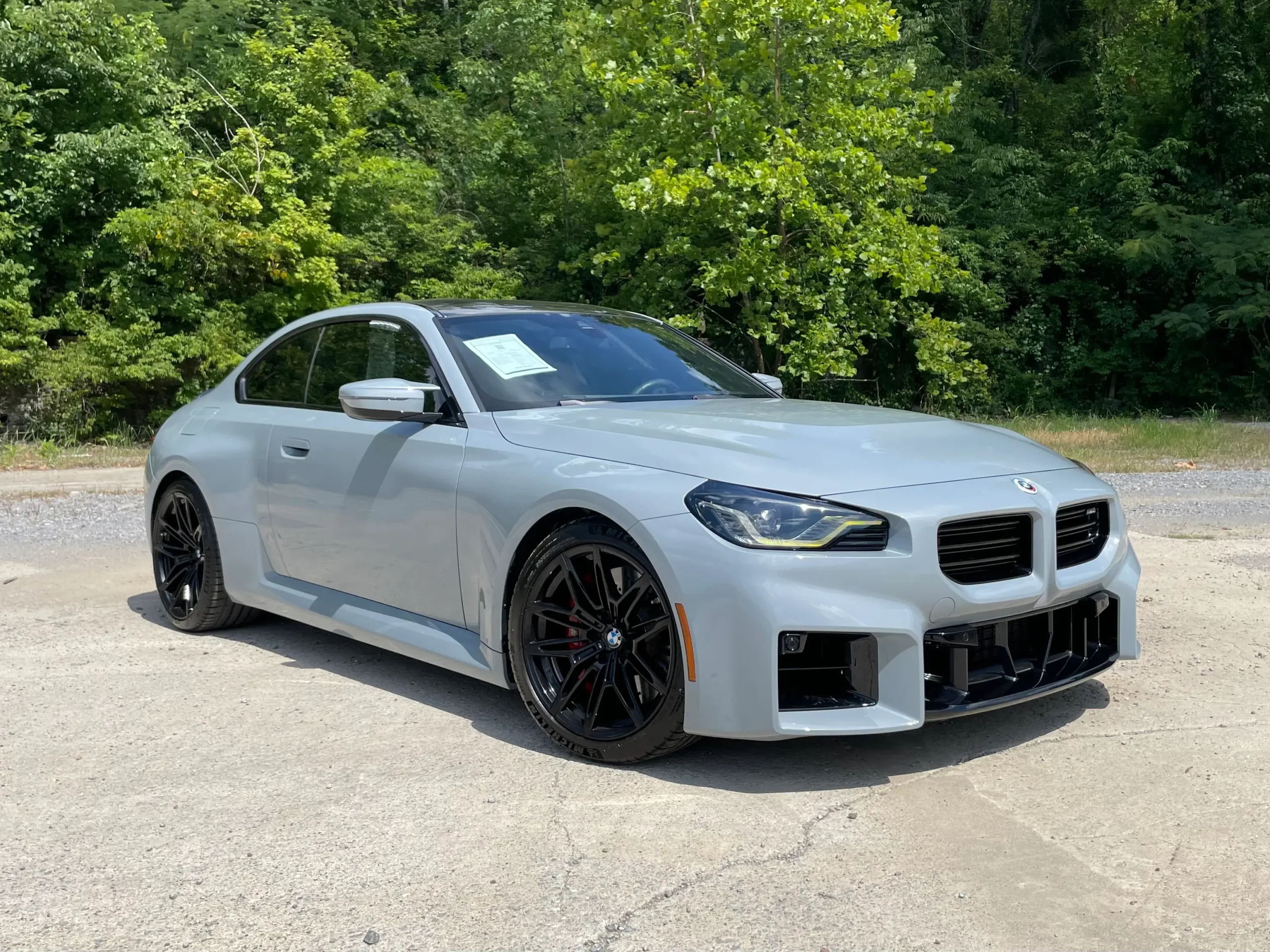
The 2025 and 2026 standard M2 models are the strongest versions of the regular rear-wheel-drive G87.
Both manual and automatic versions produce 473 horsepower. Manual cars make 406 lb-ft of torque, while automatic models produce 443 lb-ft. BMW lists a 4.1-second 0–60 time for the manual and 3.9 seconds for the automatic.
Choose the manual if driver involvement is the priority. Choose the automatic if faster shifts, additional torque, and easier daily operation matter more.
These years are a strong fit for buyers who want:
- The highest output available in a standard rear-wheel-drive M2
- Current infotainment and interior technology
- A manual or automatic transmission
- A newer car with more remaining factory warranty coverage
2026 BMW M2 CS: Best for Maximum Performance
The 2026 M2 CS is the fastest and most powerful M2 covered in this guide.
It produces 523 horsepower, reaches 60 mph in a BMW-estimated 3.7 seconds, and has a top speed of 188 mph. The CS also includes carbon-fiber components, model-specific chassis tuning, adaptive suspension, M Compound brakes, and a lower ride height.
The CS is only offered with an eight-speed automatic. Buyers who want a modern M2 with a manual transmission must choose the standard model.
Its higher price also means it should be evaluated differently from a normal used M2. Original equipment, paint condition, accident history, documentation, and long-term collectibility all deserve additional attention.
What Are the Best BMW M2 Years to Buy?
There is no single best M2 year for every buyer, but several model years stand out for specific reasons.
2018 BMW M2: Best Original M2
The 2018 M2 is the final model year before the Competition replaced it. It is a good choice for buyers who prefer the N55 engine and original M2 personality.
Do not automatically pay more for a 2018 if an earlier car is in better condition. A clean 2016 or 2017 with complete service records can still be the better purchase.
2019–2021 M2 Competition: Best Performance Value
The Competition is likely to be the sweet spot for many used buyers.
It offers more power, improved cooling, stronger brakes, and a more serious chassis than the original M2 while remaining less expensive than most CS examples.
The 2019 model should not automatically be avoided because it was the first Competition year. Compare the actual condition, ownership history, modifications, and maintenance of each vehicle.
2025–2026 M2: Best Modern Standard Models
The 2025 update makes these the most desirable standard G87 years so far.
They receive the 473-hp engine tune, increased automatic-transmission torque, BMW Operating System 8.5, updated steering-wheel design, and expanded option availability.
A 2023 or 2024 may still be the better value if the price difference is significant.
2020 and 2026 M2 CS: Best Collector Choices
Both CS generations offer limited production and meaningful performance upgrades.
The 2020 car is smaller and offers a manual transmission. The 2026 model is substantially more powerful, faster, and more technologically advanced.
Neither is automatically the best M2 for normal road use. A standard M2 or M2 Competition may provide most of the enjoyment at a much lower purchase price.
Are There Any BMW M2 Years to Avoid?
There is not enough evidence to label one BMW M2 model year as universally bad.
The introductory 2016 and 2023 model years may deserve additional inspection because they began new generations, but that does not mean buyers should avoid every example.
A well-maintained first-year car can be a better purchase than a neglected later model.
The M2 to avoid is usually one with:
- Missing or inconsistent maintenance records
- Undisclosed engine or software modifications
- Poor-quality suspension or exhaust work
- Mismatched or heavily worn tires
- Signs of repeated track use without corresponding maintenance
- Previous structural or underbody damage
- Warning lights or stored diagnostic faults
- Unclear ownership or accident history
Condition, maintenance, modifications, and previous use are more important than choosing a year based only on online reputation.
BMW M2 Reliability and Common Issues
The BMW M2 can be a dependable performance car when it is properly maintained, but it should not be evaluated like a normal 2 Series.
Its engine, cooling system, brakes, tires, differential, and suspension may be exposed to much greater loads, especially if the previous owner modified the car or used it on a track.
There is no single failure that affects every M2 generation. The most important ownership concerns are usually the condition of the individual vehicle and the cost of performance-related maintenance.
Modifications and Engine Tuning
M2 models are frequently modified.
Common changes include engine software, piggyback tuning modules, downpipes, intakes, exhaust systems, lowering springs, coilovers, wheel spacers, and aftermarket wheels.
A modified car is not automatically a bad purchase, but the quality of the work matters. Ask who installed the parts, whether original components are included, and whether the engine or transmission software has been returned to stock.
A car advertised as stock may still have been modified previously. A pre-purchase diagnostic scan and inspection can help identify inconsistencies.
Tires and Alignment
High-performance tires can wear quickly, especially when the car is driven aggressively.
Inspect all four tires for:
- Matching brand and model
- Correct sizing
- Adequate tread depth
- Inner-edge wear
- Cracking or age
- Signs of repeated heat cycles
- Uneven wear that may indicate an alignment or suspension problem
Cheap or mismatched tires can also change the way an M2 steers, brakes, and transfers power.
Brakes
Brake replacement can be expensive, particularly on Competition and CS models.
Check the thickness and condition of the pads and rotors. Look for heavy rotor lips, cracking, discoloration, vibration during braking, or warning messages.
Some noise may come from performance-oriented brake materials, but it should not be assumed that every squeal is normal. The braking system should still be inspected.
Fluid Leaks and Cooling-System Condition
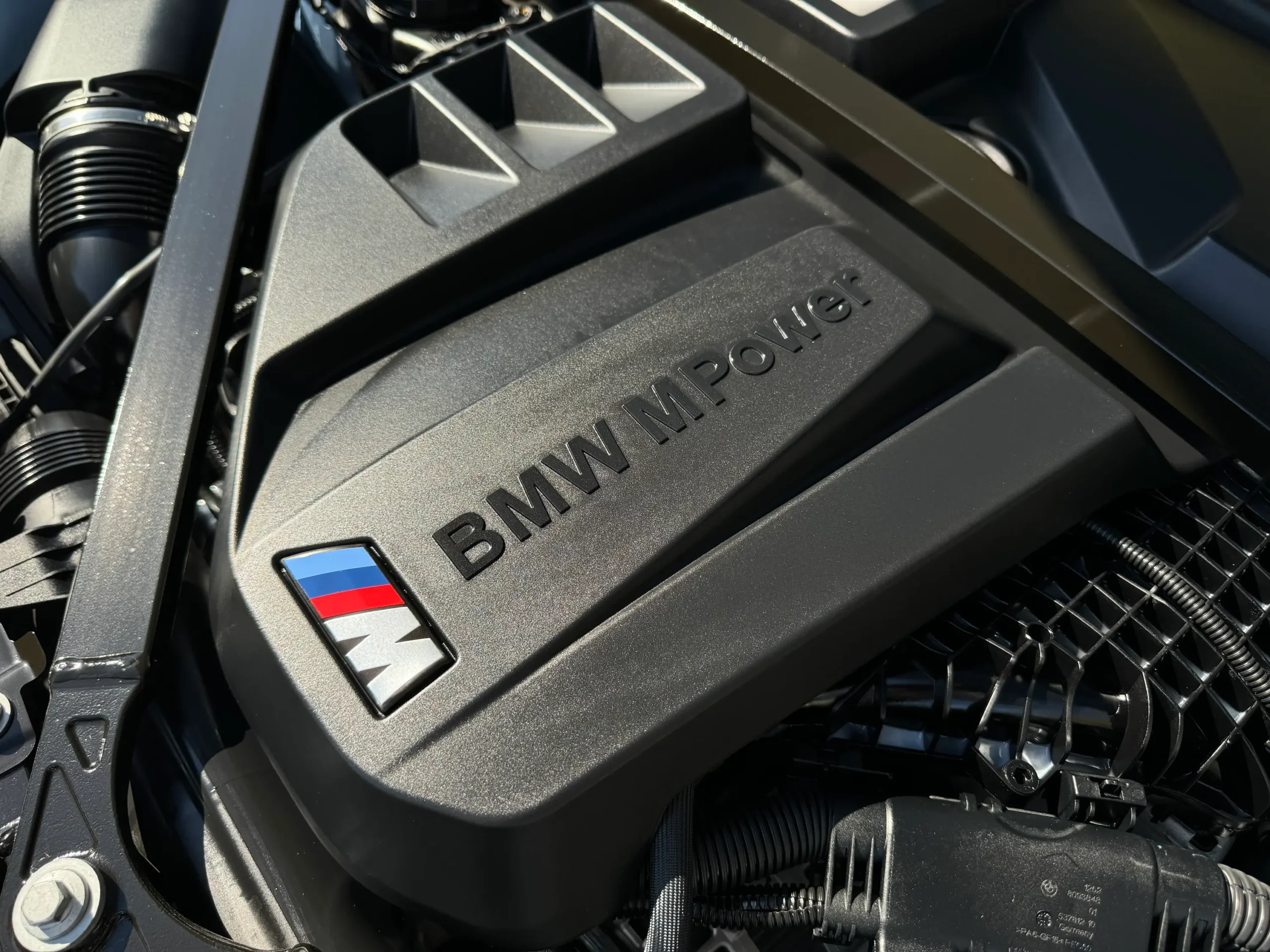
As an M2 gets older, inspect the engine bay and underbody for oil or coolant residue.
Cooling-system condition is especially important on a car that has been tuned or driven on a track. Ask about coolant service, previous repairs, overheating warnings, and any replacement cooling components.
This is a general inspection priority, not a reason to declare all early M2 models unreliable.
Manual, DCT, and Automatic Transmissions
A manual-transmission car should have consistent clutch engagement without slipping, excessive vibration, or difficulty selecting gears.
On DCT-equipped F87 models, check for warning messages, fluid leaks, harsh behavior outside normal operating characteristics, and evidence of delayed maintenance.
The G87’s eight-speed automatic should shift consistently in both normal and manual modes. Any hesitation, warning light, or abnormal noise deserves further diagnosis.
Suspension and Underbody Damage
Inspect the suspension for leaking dampers, damaged bushings, bent wheels, incorrect ride height, and poor-quality aftermarket parts.
The underside of the front bumper, side skirts, floor, exhaust, and rear differential area can also reveal contact with curbs, speed bumps, road debris, or track surfaces.
Used BMW M2 Inspection Checklist
Before buying a used BMW M2, review more than the mileage and exterior condition.
Verify the Vehicle’s History
Review the vehicle history report, ownership changes, accident records, registration history, and available service invoices. You should also enter the vehicle’s VIN into the NHTSA recall lookup tool to check for open safety recalls before buying.
A clean history report is helpful, but it does not replace a physical inspection or confirm that every accident, repair, or modification has been reported.
Confirm the Maintenance Record
Look for consistent oil changes and documentation for brake fluid, coolant, spark plugs, transmission service where applicable, and other age- or mileage-based maintenance.
Ask whether major work was completed by a BMW dealer, independent BMW specialist, or general repair shop.
Identify Every Modification
Create a complete list of engine, exhaust, suspension, brake, wheel, tire, and cosmetic modifications.
Ask whether the car was previously tuned, even if the current software appears stock.
Inspect the Tires and Brakes
Performance tires and large brake components can add significant cost immediately after purchase.
Their condition can also provide clues about how the vehicle was driven and maintained.
Check for Track Use
Track use does not automatically make an M2 a bad car. Many M2 models were designed to handle track driving.
The concern is repeated hard use without appropriate maintenance.
Look for heavily heat-cycled tires, brake discoloration, replaced tow-hook covers, unusual paint damage, track numbers or adhesive residue, harness mounting points, and modifications intended primarily for circuit use.
Test Every Driving Mode
Test the steering, suspension, throttle, transmission, differential, and stability-control settings when it is safe and legal to do so.
Make sure the vehicle changes modes correctly and does not display drivetrain, chassis, or restraint-system warnings.
Arrange a Pre-Purchase Inspection
A qualified BMW or European performance specialist should inspect the car before purchase.
The inspection should include a diagnostic scan, underbody review, leak check, brake and tire measurements, suspension inspection, and confirmation of visible modifications.
This is especially important for tuned cars, CS models, vehicles without complete service records, and cars purchased remotely.
Is the BMW M2 a Good Daily Driver?
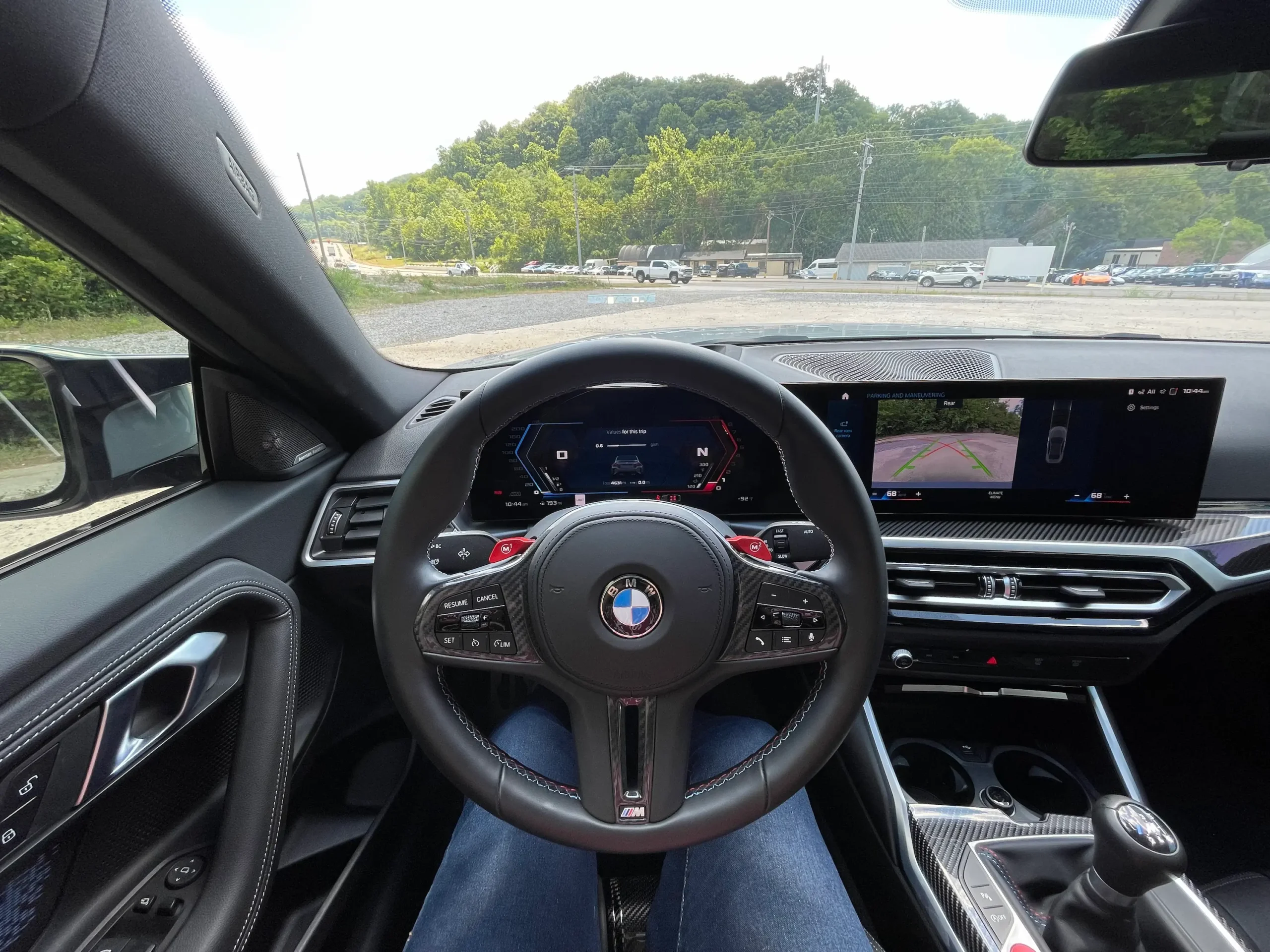
The BMW M2 can work as a daily driver, but its compromises should be understood before purchase.
The front seats and driving position are suitable for regular use, and the coupe has a usable trunk. The rear seats are better for occasional passengers, children, or additional storage than frequent adult use.
Ride quality is firm, particularly with aggressive wheel and tire combinations. Road noise, tire replacement cost, fuel use, and limited rear-seat access may also matter during daily ownership.
Transmission choice changes the experience considerably.
The six-speed manual provides more involvement but requires more effort in traffic. The DCT in the first-generation car shifts quickly and has a distinct performance character. The G87’s eight-speed automatic is smoother in everyday driving while still offering fast manual control.
Every M2 through the 2026 model year covered here sends power to the rear wheels. Drivers in areas with snow or frequent freezing temperatures should budget for suitable seasonal tires rather than relying only on the car’s stability-control system.
Is an All-Wheel-Drive BMW M2 Available?
BMW has announced the first M2 with M xDrive for the 2027 model year.
The 2027 M2 xDrive will use the 473-hp inline-six, an eight-speed automatic transmission, and a rear-biased all-wheel-drive system. BMW says it can accelerate from 0 to 60 mph in 3.6 seconds, compared with 3.9 seconds for the rear-wheel-drive automatic model.
It will also include a selectable 2WD mode when stability control is switched off. The U.S. market launch is scheduled for late summer 2026.
The xDrive model will provide better traction, but it will not replace the rear-wheel-drive M2. Buyers who want a manual transmission will still need the rear-wheel-drive version.
BMW M2 Ownership Costs
The purchase price is only one part of the cost of owning an M2.
Budget for:
- Premium fuel
- Performance tires
- Brake pads and rotors
- Regular fluid services
- Insurance
- Wheel and alignment repairs
- Age-related seals, hoses, and cooling components
- Additional maintenance after track use
- More expensive CS-specific parts where applicable
A lower-priced M2 that immediately needs tires, brakes, maintenance, and correction of poor modifications may cost more than a better example with a higher asking price.
An extended warranty may be useful for some buyers, but it is not automatically necessary for every car. Review the deductible, claim limits, covered components, exclusions, modification rules, and repair-facility requirements before purchasing coverage.
Final Verdict: Is a Used BMW M2 Worth Buying?
A used BMW M2 is worth considering if you want a compact performance coupe with a strong inline-six engine, rear-wheel-drive character, and more driver involvement than many newer luxury cars provide.
The original M2 is the simpler and often more affordable choice. The M2 Competition is one of the best all-around options for used buyers. The standard G87 provides considerably more power and technology, while the CS models offer greater performance and exclusivity at a much higher price.
The best purchase is not automatically the newest or most powerful car. A stock or carefully modified M2 with complete records, strong mechanical condition, quality tires, healthy brakes, and a professional inspection is usually a better choice than a questionable example from a supposedly desirable year.
Still deciding between BMW’s compact and larger M coupes? Read our BMW M2 vs BMW M4 comparison to compare size, performance, comfort, pricing, and daily usability.
Ready to explore your options? Browse AutoPro Nashville’s current BMW inventory and call 615-377-6101 for BMW M2 availability, vehicle details, financing options, or to schedule a visit. Delivery is available. Discuss delivery cost and scheduling for the specific vehicle.
What is the best BMW M2 year to buy?
The 2019–2021 M2 Competition is one of the best all-around choices because it combines the compact F87 body with the 405-hp S55 engine and upgraded performance hardware. The 2018 M2 is a strong original-model choice, while the 2025–2026 M2 is better for buyers who want maximum standard-model power and newer technology.
What is the difference between the BMW M2 and M2 Competition?
The original 2016–2018 M2 uses a 365-hp N55 engine. The 2019–2021 M2 Competition uses a 405-hp S55 twin-turbo engine and adds stronger cooling, larger brakes, additional chassis bracing, and other performance upgrades.
Is the BMW M2 reliable?
The BMW M2 can be reliable when maintained properly, but condition and previous use matter. Modified cars, incomplete maintenance records, worn tires and brakes, leaks, accident repairs, and repeated track use without supporting maintenance create more concern than the model year alone.
Is the BMW M2 a good daily driver?
Yes, the M2 can be used daily if you are comfortable with a firm ride, two-door access, limited rear-seat space, premium fuel, and performance-car operating costs. Automatic models are easier in traffic, while manual models provide more driver involvement.
What should I inspect before buying a used BMW M2?
Check the service and accident history, modifications, tires, brakes, suspension, underbody, fluid leaks, cooling-system condition, clutch or transmission operation, and diagnostic fault history. A pre-purchase inspection by a BMW or European performance specialist is strongly recommended.