Used BMW M3 vs M4 Which Makes the Better Daily Driver
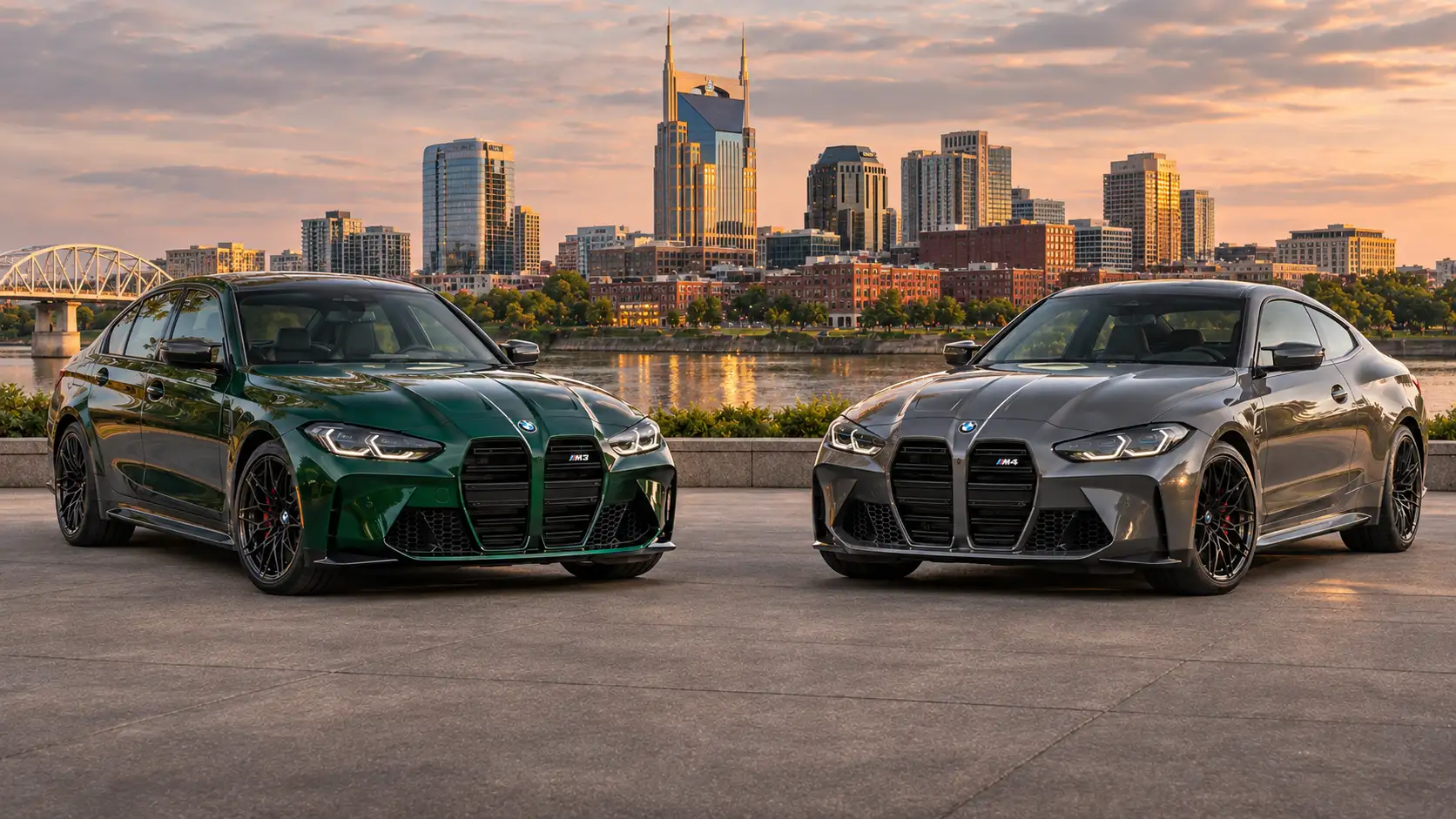
Choose a used BMW M3 if you regularly carry passengers, fit child seats, or want one performance car for work and family life. Choose a used BMW M4 Coupe if you usually travel alone or with one passenger and prefer the coupe shape. Matched versions share much of their performance hardware, so the BMW M3 vs M4 decision is mainly about how you will use the car. AutoPro Nashville can help with available examples at 615-377-6101.
This comparison focuses on U.S. M3 sedans and M4 coupes. It separates the older F80/F82 generation from the newer G80/G82 cars, with the M4 Convertible treated separately. Along with passenger access and running costs, it explains which factory packages deserve attention when two used examples have similar prices.
| Daily ownership factor | BMW M3 Sedan | BMW M4 Coupe |
|---|---|---|
| Passenger access | Four doors make regular rear-seat use easier | Two doors require access past the front seats |
| Seating | Five seats in mainstream versions | Four seats |
| Parking | Shorter doors help in narrow spaces | Longer doors need more room to open |
| Performance | Match generation, transmission, and drivetrain | Comparable trims offer closely matched performance |
| Ownership costs | Condition, equipment, and use drive the bill | Shares many mechanical cost factors with the sedan |
| Best fit | One performance car with regular passenger duties | A coupe for mostly front-seat use |
Compare the same generation and trim first
Older used cars with the S55 engine
The F80 M3 and F82 M4 Coupe introduced for the 2015 U.S. model year use the S55 twin-turbocharged 3.0-liter inline-six. Standard launch versions made 425 hp and offered a six-speed manual or seven-speed dual-clutch automatic. Later Competition and special editions require their own comparison, because equipment and output differ.
Compare a 2017 M3 Competition with a similarly equipped 2017 M4 Competition, for example. An older manual sedan and a newer automatic coupe may fit the same budget, but their price difference cannot be explained by the number of doors alone. Age, maintenance, modifications, and condition deserve just as much attention.
Newer used cars with the S58 engine
The G80 M3 and G82 M4 arrived for the 2021 U.S. model year with the S58 twin-turbocharged inline-six. In the mainstream lineup, the standard rear-wheel-drive versions pair 473 hp with a six-speed manual. Competition rear-wheel-drive cars use an eight-speed automatic and make 503 hp. BMW added Competition xDrive versions for 2022, bringing all-wheel drive to both body styles.
For 2025, Competition xDrive output increased from 503 to 523 hp in both models. That increase did not apply to the regular manual or rear-drive Competition versions. The mainstream 2027 U.S. lineups retain the same 473, 503, and 523-hp choices. A newer model year therefore does not automatically mean more power than every earlier version.
CS, CSL, and other limited editions sit outside the main comparison. Their equipment, production numbers, and pricing can distort a straightforward daily-driver decision. Compare these versions separately.
For deeper model-year background, see our used BMW M3 buying guide and BMW M4 guide.
Used prices and what a fair premium buys
Do not assume the two-door car will cost more. Used asking prices can reverse the original new-car price relationship. A small U.S. listing sample checked on November 15, 2026 showed the following prices for 2023 Competition xDrive examples. All M4 examples below are coupes, and both groups use the 503-hp automatic powertrain.
| Listing sample | Mileage | Advertised price |
|---|---|---|
| M3 Competition xDrive | 9,501 | $85,589 |
| M3 Competition xDrive | 31,238 | $81,995 |
| M3 Competition xDrive | 41,796 | $78,903 |
| M4 Competition xDrive Coupe | 4,933 | $79,106 |
| M4 Competition xDrive Coupe | 20,754 | $78,022 |
| M4 Competition xDrive Coupe | 22,647 | $74,262 |
Source: Prices gathered from CarGurus on November 15, 2026. These are advertised asking prices, not completed sales or AutoPro quotes. Equipment, condition, mileage, and vehicle history affect pricing.
The selected M3s ranged from about $79,000 to $86,000, while the selected M4 coupes ranged from about $74,000 to $79,000. Those ranges describe this sample only. The low-mileage M3 was $6,483 above the low-mileage M4, but even that pair is not an equipment-matched appraisal. It cannot establish a typical sedan premium.
Before paying more, compare the original window stickers, accident history, remaining warranty, tire condition, and brake specification. A cheaper car needing tires and brakes may leave you with less value than a better-maintained example. Conversely, expensive carbon options are only worth paying for if you actually want them.
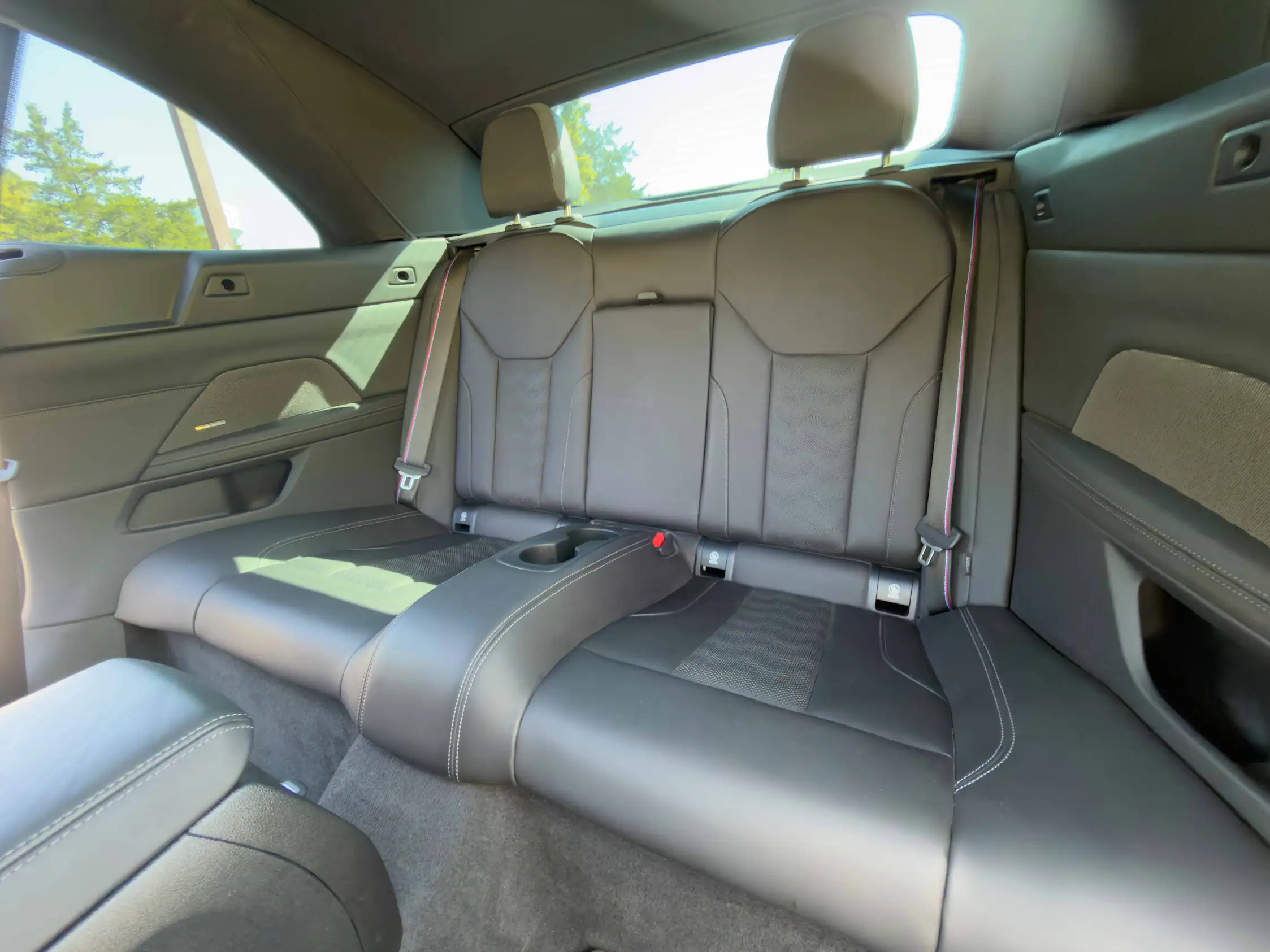
Rear seats and child seats change the decision
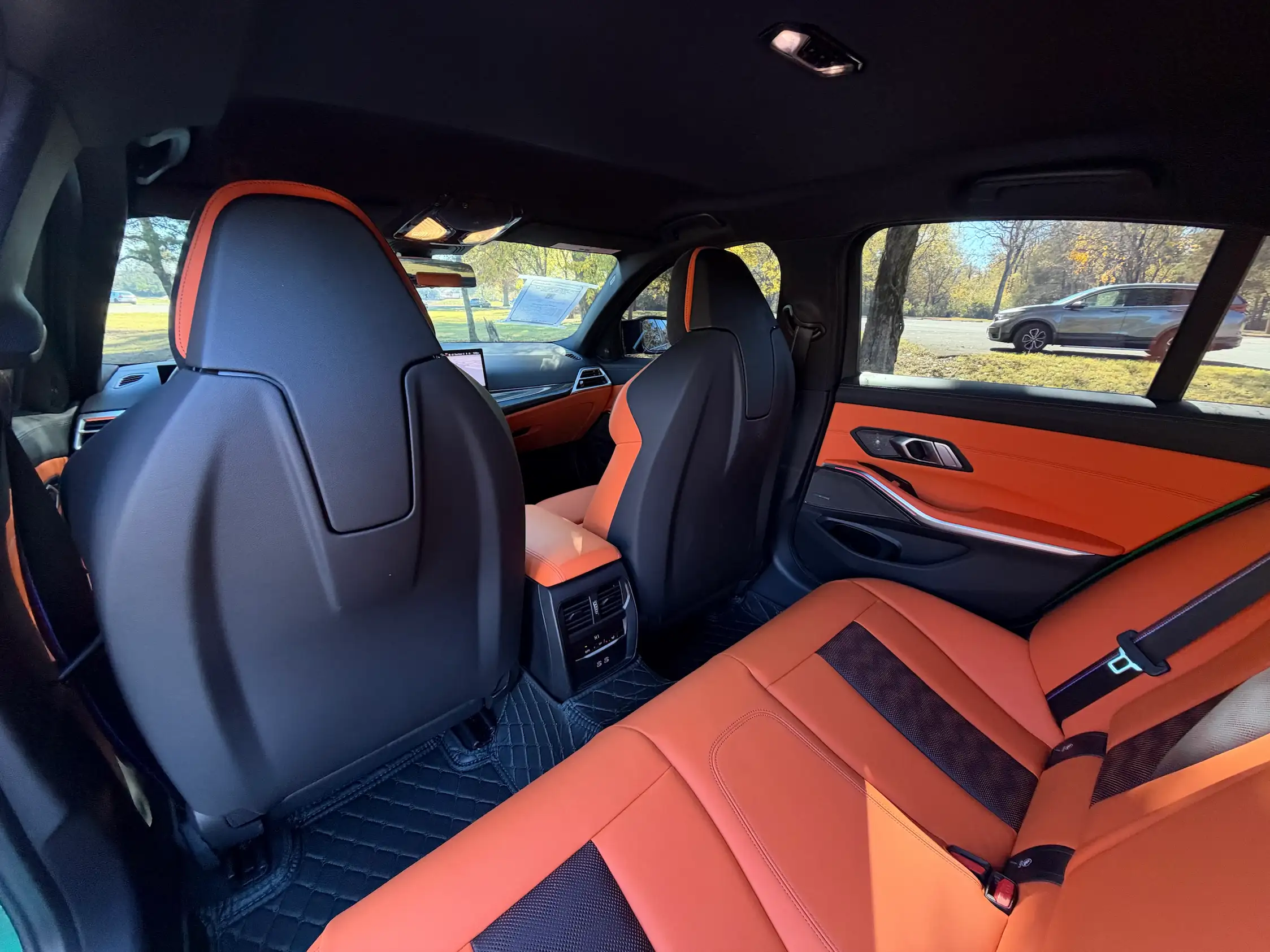
The M3 has the clearer advantage when someone uses the back seat several times a week. Rear doors let you reach a child seat directly, help a passenger get settled, or load a bag without moving a front seat. Its fifth seating position can also matter, although the center rear seat deserves a real fit check before you plan regular five-person trips.
The M4 Coupe has two rear seats, so it can handle occasional passengers. However, getting in requires moving past a front seat, and the lower roofline makes the entry less convenient. If your passenger has limited mobility, test the whole entry and exit process instead of judging the car from a seated photograph.
Bring your actual child seat to the viewing. Confirm the approved installation method in the vehicle and seat manuals, then check front-passenger space with the child seat installed. A rear-facing seat that technically fits can still make the front seat uncomfortable. The sedan makes access easier, but it does not guarantee every seat-and-passenger combination will work.
Parking and luggage matter more than they look on paper
A coupe is not automatically easier to live with in a small garage. The M4’s longer doors need a wider opening to provide comfortable access. Park beside another vehicle during the test drive and check whether you can get out without twisting around the door. Repeat that check with the front seat set to your usual position.
For the newer generation, these are similarly sized cars rather than a large sedan and a compact coupe. Test rear-quarter visibility, camera quality, parking sensors, and the actual equipment fitted. A parking package listed on one car should not be assumed to be present on another.
Both have conventional trunks. The useful test is whether your stroller, golf bag, or suitcase passes through the opening, not just the published volume. In the M3, rear doors also make it easier to place smaller items on the back seat. In the M4, try the folding-seat arrangement and load your longest regular item before deciding.
Comfort depends on the seats and tires as well as the badge
Neither body style guarantees a softer commute. Compare cars on the same road, in their most comfortable suspension setting, with attention to wheel size, tire model, inflation pressure, and seat type. Worn tires or a modified suspension can make a bigger difference than the sedan-versus-coupe choice.
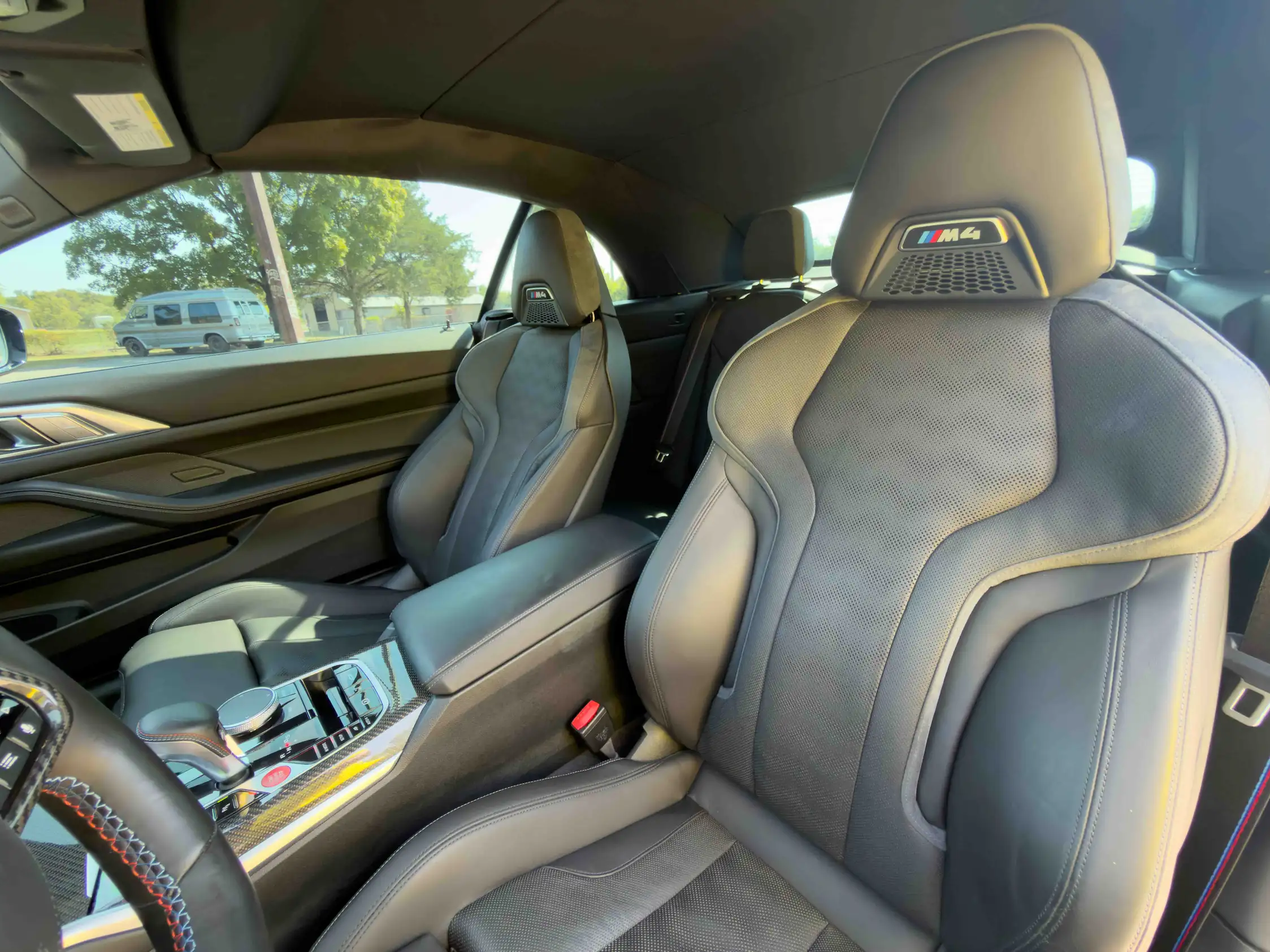
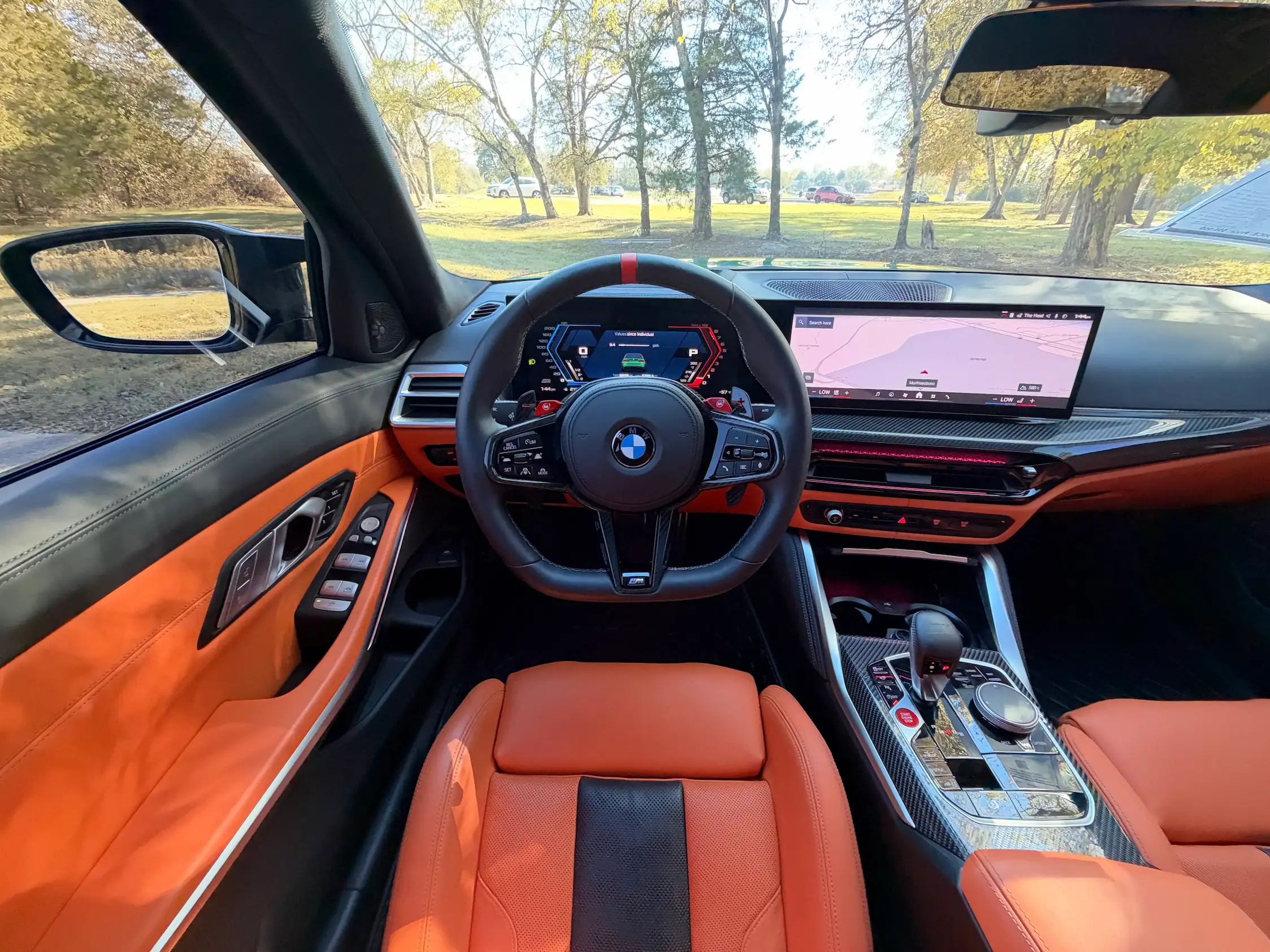
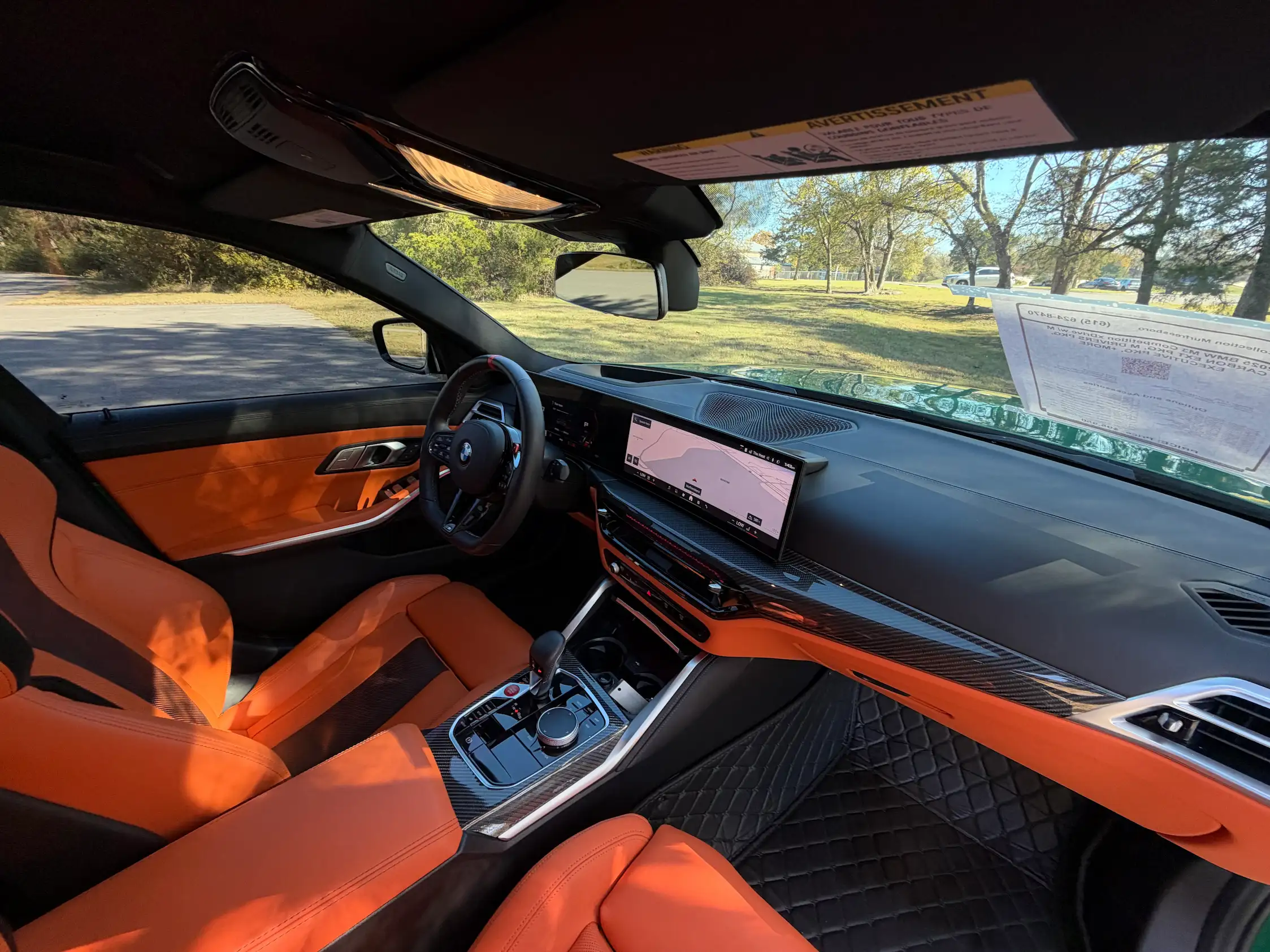
The optional M Carbon bucket seats on newer examples deserve an extended sit. Their pronounced bolsters can suit a driver who values support, but climbing over them repeatedly may become tiresome. Standard sport seats are worth considering for a car used for errands and commuting. Check the exact car for ventilation and other comfort features rather than assuming every expensive seat has them.
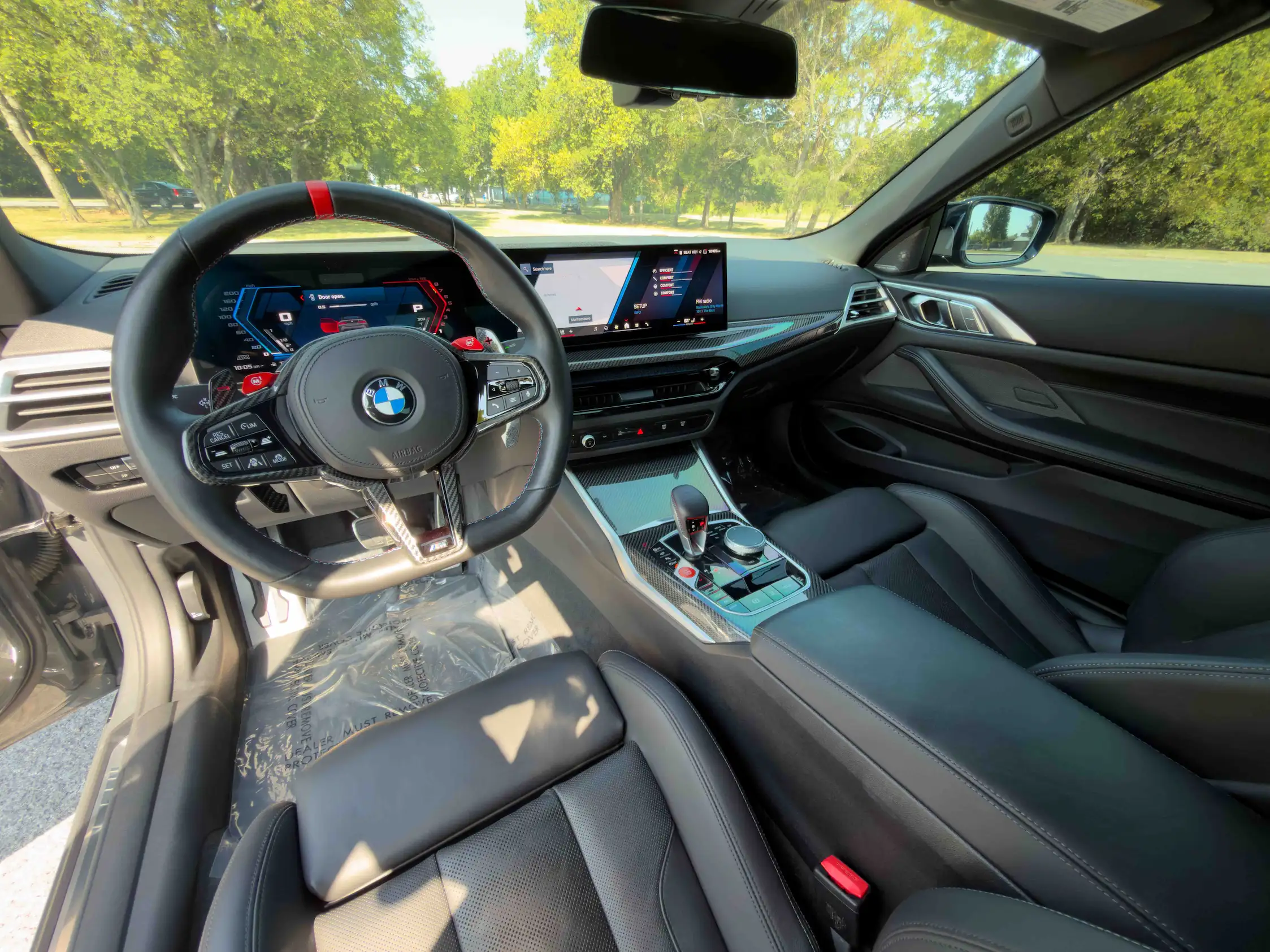
Cabin technology also changes by year. The M3 gained BMW’s Curved Display for 2023, while the M4 followed for 2024. Earlier cars may appeal if you prefer their separate screens and more physical controls. Try navigation, climate adjustments, and phone pairing before paying extra for the newer interface.
Which packages are worth paying for
A well-equipped M4 can suit your commute better than a lightly equipped M3, provided you do not need the rear doors. Compare the features you will use every week before paying extra for appearance options. The examples below focus on G80 and G82 cars; older F80 and F82 package names and contents need a separate window-sticker check.
| Package or option | What to look for | Daily driver value |
|---|---|---|
| Executive Package | Head-up display and comfort features; contents vary by year | Useful if the included features match your routine |
| Parking Assistance Package | Surround-view cameras and parking assistance; check Drive Recorder separately | Worth prioritizing for tight garages and frequent city parking |
| Driving Assistance Professional | Adaptive cruise and expanded driving assistance on eligible automatic cars | Most relevant for regular highway commuting |
| M Carbon Exterior Package | Carbon-fiber exterior details | An appearance preference rather than a comfort upgrade |
| M Driver’s Package | Higher speed limiter and original driver-training benefit | Low priority for everyday road use |
Executive and Parking Assistance for everyday convenience
On the 2022 Competition xDrive models, Executive bundled a head-up display, heated steering wheel, power trunk lid, upgraded headlights, and other convenience features. A head-up display can be useful if you prefer speed and navigation information near your forward view. However, do not assume that a newer Executive-equipped car has exactly the same feature list as an earlier one.
Parking Assistance is particularly useful to compare on the coupe, where door clearance already deserves attention. Look for surround-view cameras that help you judge curbs and nearby obstacles. BMW included Drive Recorder in the 2021 and 2022 package descriptions, but later listings should be checked individually. Test the camera views and confirm the recording feature is present and available.
BMW’s official M3 and M4 equipment overview explains the launch-generation packages. Treat it as a reference for those cars, then confirm the exact model year and VIN specification.
Driving Assistance Professional for frequent highway use
This package is worth considering if long highway trips or heavy traffic are part of your week. On the launch-generation Competition models, it added adaptive cruise control with Stop & Go and expanded lane and traffic assistance. Basic cruise control or a listing that says “Driving Assistance” does not establish that the car has the Professional package.
BMW restricted the launch-generation Professional package to automatic Competition models. Manual buyers should check the available assistance features individually. These systems still require driver supervision, and traffic-assistance functions have operating limits. Try the controls and check the owner’s manual for the car you are buying.
Carbon options and M Driver’s Package
M Carbon Exterior changes the appearance through carbon-fiber pieces. It does not establish that the car also has carbon bucket seats, carbon-ceramic brakes, or carbon interior trim. Inspect each item separately and check exterior pieces for cracks or expensive cosmetic damage.
The M Driver’s Package raises the speed limiter and originally included a driver-training benefit. It does not add horsepower, and a used buyer should not assume the training benefit transfers. For daily driving, prioritize useful comfort and parking equipment before paying a premium for this package.
M Drive Professional is a separate option, with track-oriented functions such as an M Laptimer and M Drift Analyzer on the launch-generation cars. It is different from Driving Assistance Professional. Neither its name nor its presence should substitute for checking the commuting features you actually want.
For most daily-driver shoppers, start with the seat fit and Parking Assistance, then weigh Executive features. Move Driving Assistance Professional higher on the list if you spend substantial time on highways. Package contents changed across years, so the original window sticker and a feature demonstration are more useful than “fully loaded” in an advertisement.
Driving feel and the transmission decision
The M4’s shape does not automatically make it the faster choice. BMW quoted the same 3.4-second 0-to-60-mph time for the 2025 M3 Competition xDrive and M4 Competition xDrive Coupe. That is a manufacturer comparison figure, not a reason to test acceleration on public roads. On a normal test drive, focus on visibility, steering response, ride control, and how confidently you place the car.
For newer mainstream models, choose the standard manual if shifting yourself is central to the purchase. Choose Competition if you prefer the eight-speed automatic, especially for frequent traffic. Older F80/F82 Competition cars could have a manual, so the Competition badge alone does not identify the transmission across generations.
M xDrive is relevant if you want all-wheel-drive traction, but it does not replace suitable tires for cold or wet conditions. Rear-wheel drive keeps the configuration simpler and remains available with either the standard manual or a Competition automatic in the newer lineup. Decide on transmission and drivetrain before comparing sedan and coupe prices.
An older dual-clutch automatic also feels different from the newer eight-speed torque-converter automatic. Test low-speed maneuvering, reverse, and stop-and-go driving. The best gearbox for a weekend drive may not be your favorite during a daily crawl through traffic.
Reliability and ownership costs are mostly shared questions
There is no sound reason to declare either body style inherently more reliable when generation and powertrain match. Both share major engine and transmission families. Service records, previous tuning, accident repairs, and the quality of maintenance are more useful buying signals than the M3 or M4 badge.
For older S55 cars, ask a BMW specialist to check engine timing-related faults, oil and coolant leaks, cooling-system condition, and any claimed crank-hub work. An aftermarket part or seller assurance is not proof of a problem-free engine. Request invoices and an inspection; internet reports do not provide a dependable failure rate for every stock car.
Newer cars need campaign checks as well. BMW issued a main-bearing-shell delivery-stop bulletin for certain 2022 vehicles, and a separate bearing-shell bulletin for certain 2026 production batches. These are specific campaign documents, not evidence that every S58 engine is affected. Ask a BMW center to confirm applicability and completion by VIN.
For either generation, budget around the equipment actually fitted. Carbon-ceramic brakes require specialist condition assessment and a replacement quote. Large performance tires, worn suspension components, and deferred service can quickly change the purchase calculation. Check tire production dates and inner-edge wear, even when the visible tread looks acceptable.
Get insurance quotes for the actual VINs before leaving a deposit. Driver history, location, coverage, and the insurer’s vehicle rating can outweigh assumptions about a sedan being cheaper. If a service contract is part of the purchase, read its exclusions, modification rules, claim limits, and coverage for the drivetrain and electronics.
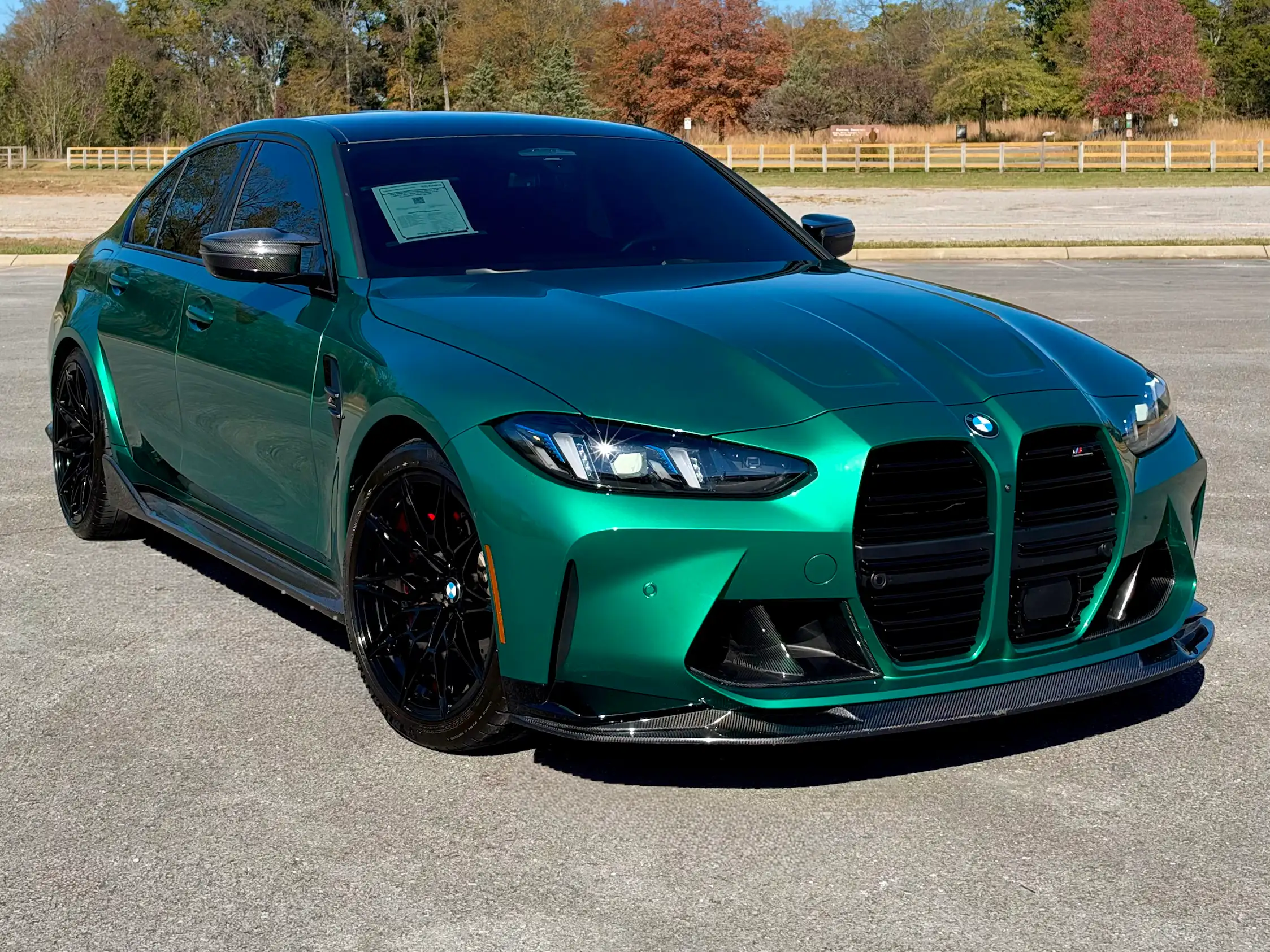
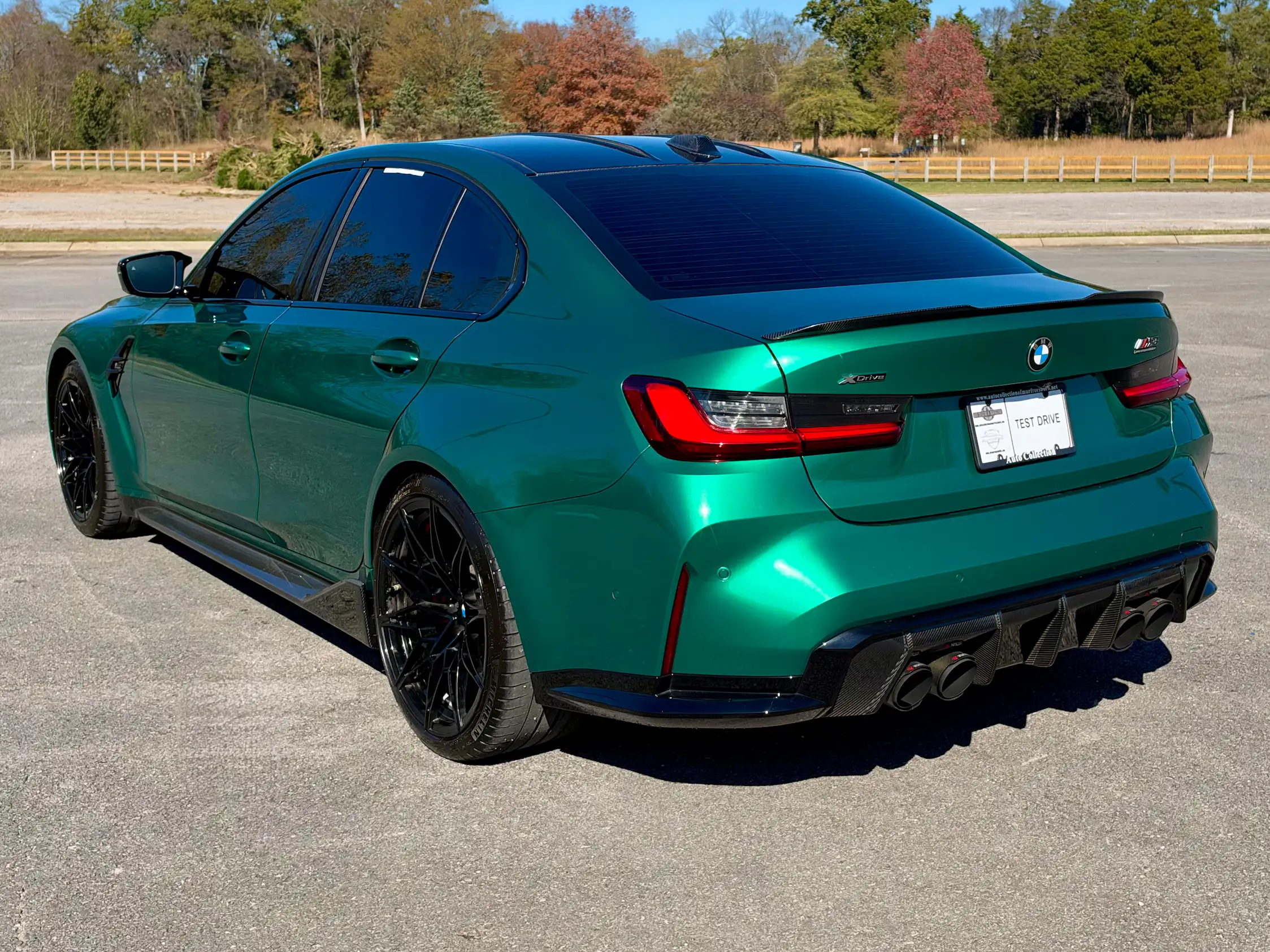
Resale value needs a specification level view
The price sample shows why you should not assume an M4 will command more simply because it is a coupe. It does not prove that every M3 retains value better. Establishing depreciation requires comparable original prices and actual market values over time, rather than six current advertisements.
For a future sale, keep records of maintenance and any original parts. A documented, largely stock car gives the next buyer fewer uncertainties to resolve. Manual gearboxes, unusual colors, and desirable options may attract particular shoppers, but none guarantees a premium or a quick sale. Buy the specification you want to use, with resale as a secondary consideration.
What to check before buying either car
- Confirm the VIN specification. Match generation, transmission, rear-wheel drive or xDrive, seat type, brake equipment, and the original window sticker.
- Review service evidence. Look for the required running-in service, subsequent maintenance, repair invoices, and an explanation for gaps.
- Arrange a specialist inspection. Request a cold start, diagnostic scan, leak and cooling-system checks, plus gearbox, differential, suspension, and underbody assessment.
- Investigate modifications. Ask about ECU software, exhaust changes, suspension work, and previous tuning. Returning a car to stock does not establish that it was always stock.
- Inspect expensive wear items. Measure tires and brakes, assess wheel damage, and look for uneven wear, cracked components, or signs of poor accident repair.
- Check campaigns in two places. Use the NHTSA VIN recall lookup for open safety recalls and ask BMW about service, emissions, and delivery-stop campaigns.
- Rehearse your daily routine. Fit the child seat, load your luggage, use the cameras, open the doors in a narrow space, and include a rough section of road in the test drive.
Which used BMW should you buy
For a single car that needs to cover commuting, passengers, and family errands, the M3 is the stronger starting point. You gain easier access and an extra seating position while keeping closely matched performance in equivalent trims. Pay a sedan premium only after checking that the condition and equipment justify it.
The M4 Coupe makes sense when you want the coupe shape and rear-seat access is an occasional compromise. If a comparable coupe costs less, that saving can be more useful than paying for rear doors you rarely open. Choose the better-maintained example over a preferred body style when the inspection reveals a meaningful difference.
Browse AutoPro Nashville’s BMW inventory to compare available M3 and M4 examples by year, drivetrain, and equipment. Availability changes, so confirm the individual car before planning a visit.
Is an M340i the same as an M3
No. An M340i is a separate M Performance model, with different engineering and equipment. Likewise, an M440i is not an M4. Search by the exact model so a lower-priced listing does not distort your comparison.
Can you buy a manual M3 or M4 with xDrive
Not in the mainstream U.S. G80 M3 or G82 M4 lineup covered here. The six-speed manual is paired with rear-wheel drive. Competition xDrive versions use an eight-speed automatic.
Does an M4 Convertible belong in the same price comparison
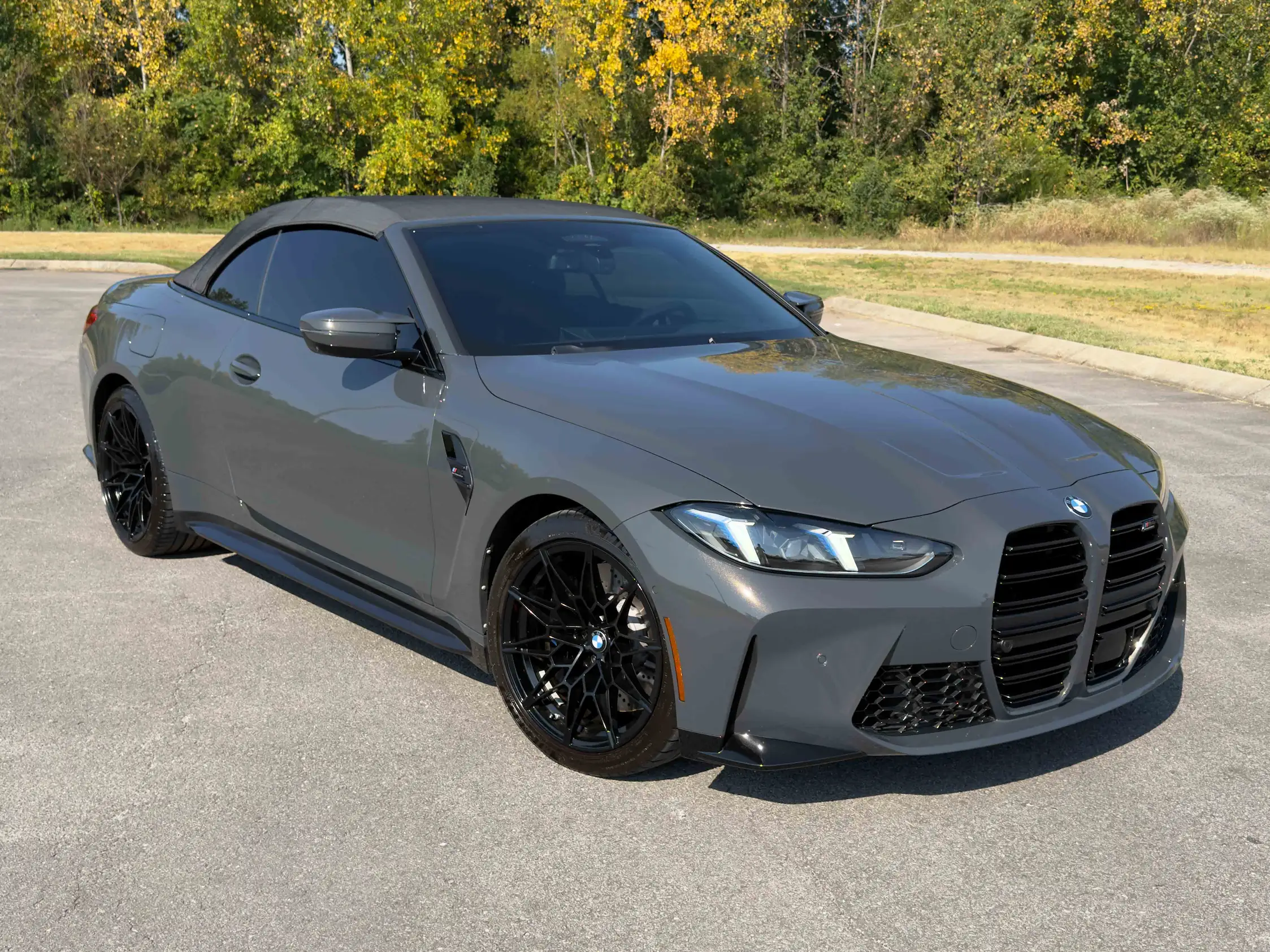
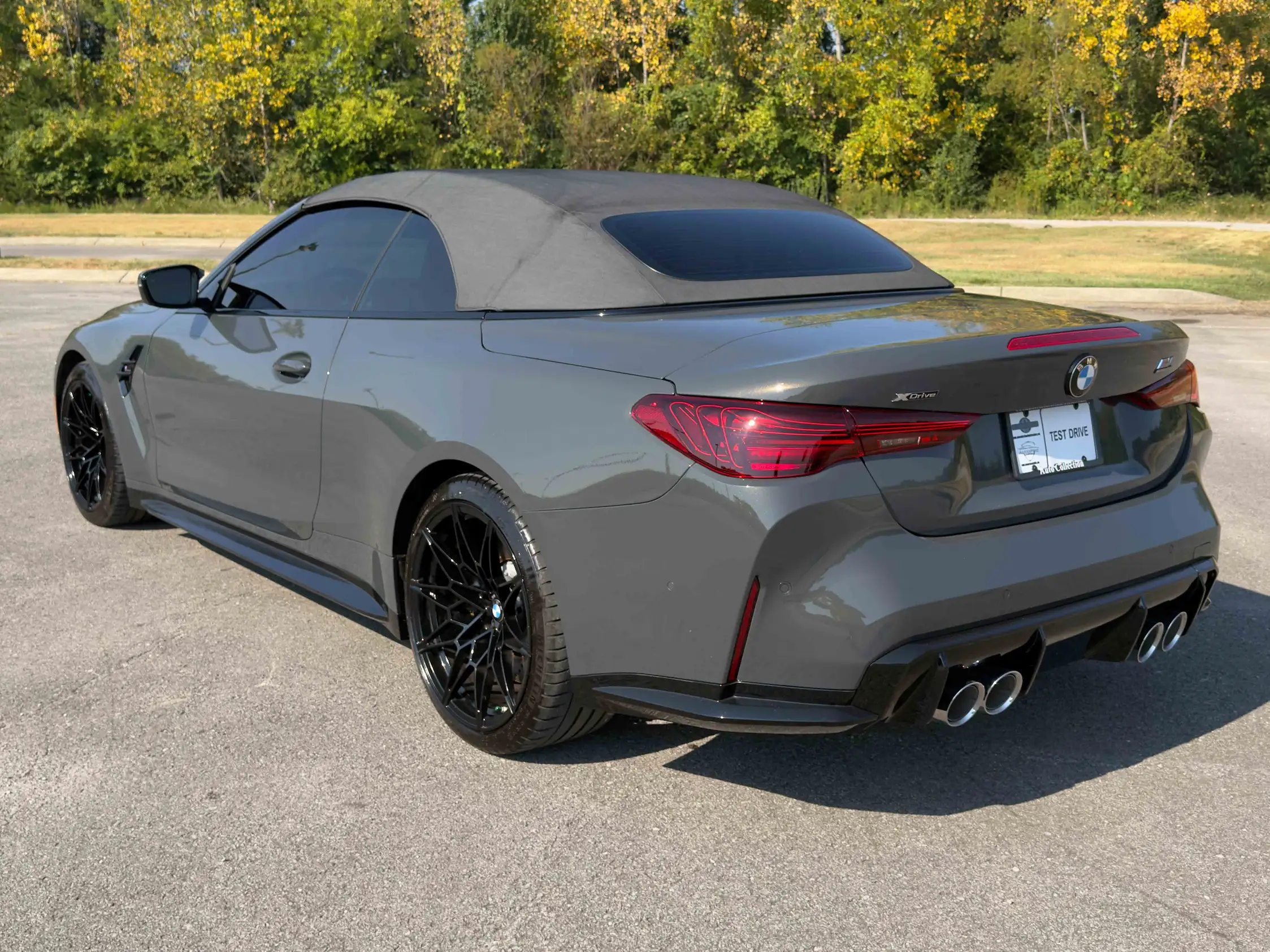
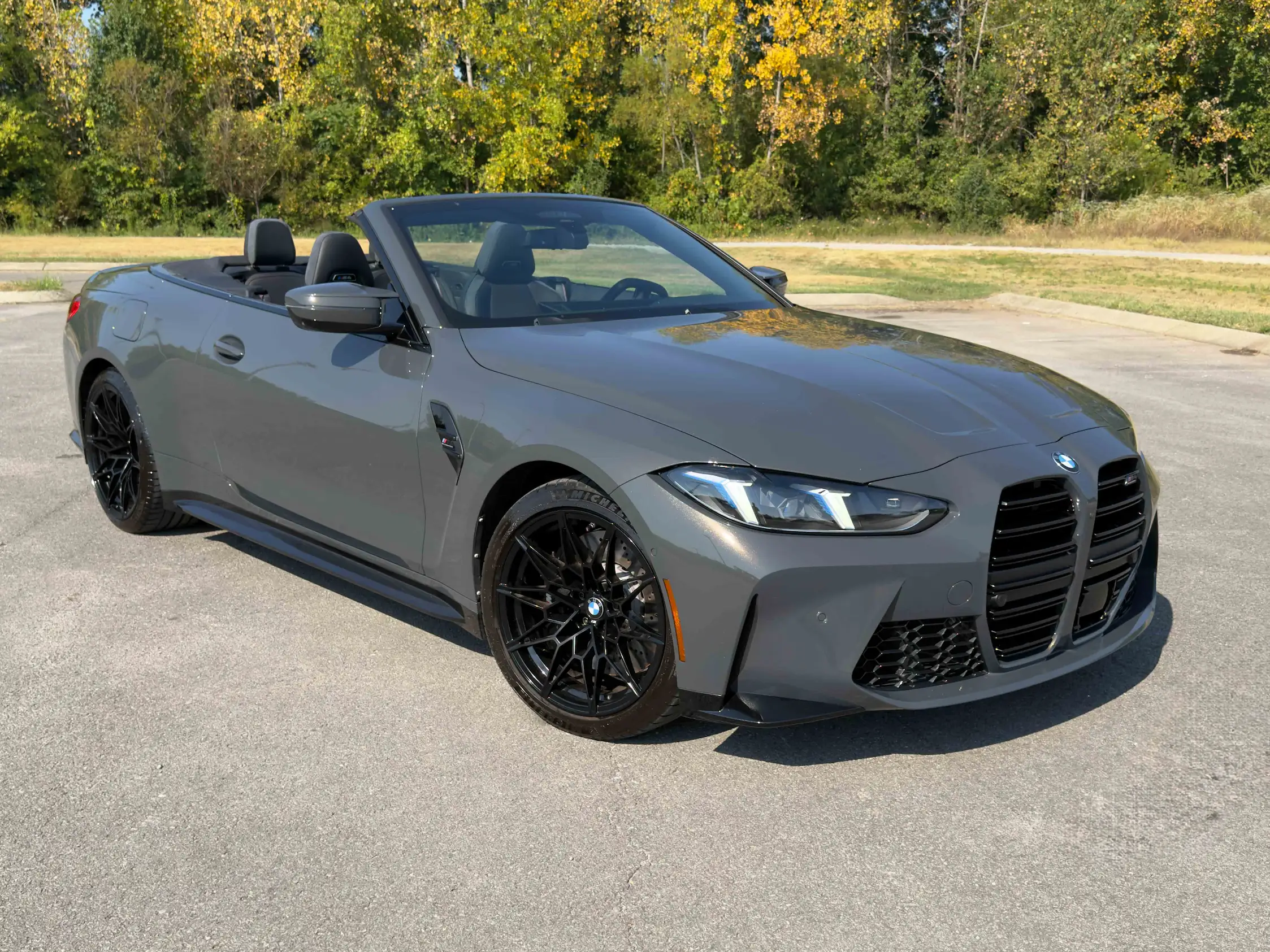
It should be a separate comparison. The roof system, weight, luggage space, and ownership checks change the decision. Older F83 convertibles have a retractable hardtop, while newer G83 versions use a soft top. Inspect roof operation, seals, and water intrusion before treating one as an alternative to a coupe.
Does Competition always mean all wheel drive
No. Newer U.S. M3 and M4 Competition models include rear-wheel-drive versions. Confirm that the car is specifically an xDrive model through its VIN specification rather than relying on an exterior badge.
Is the M4 a two seat car
The mainstream M4 Coupe has four seats. Special versions can differ, including the rear-seat-delete M4 CSL. Confirm the individual specification if you are shopping a limited edition.