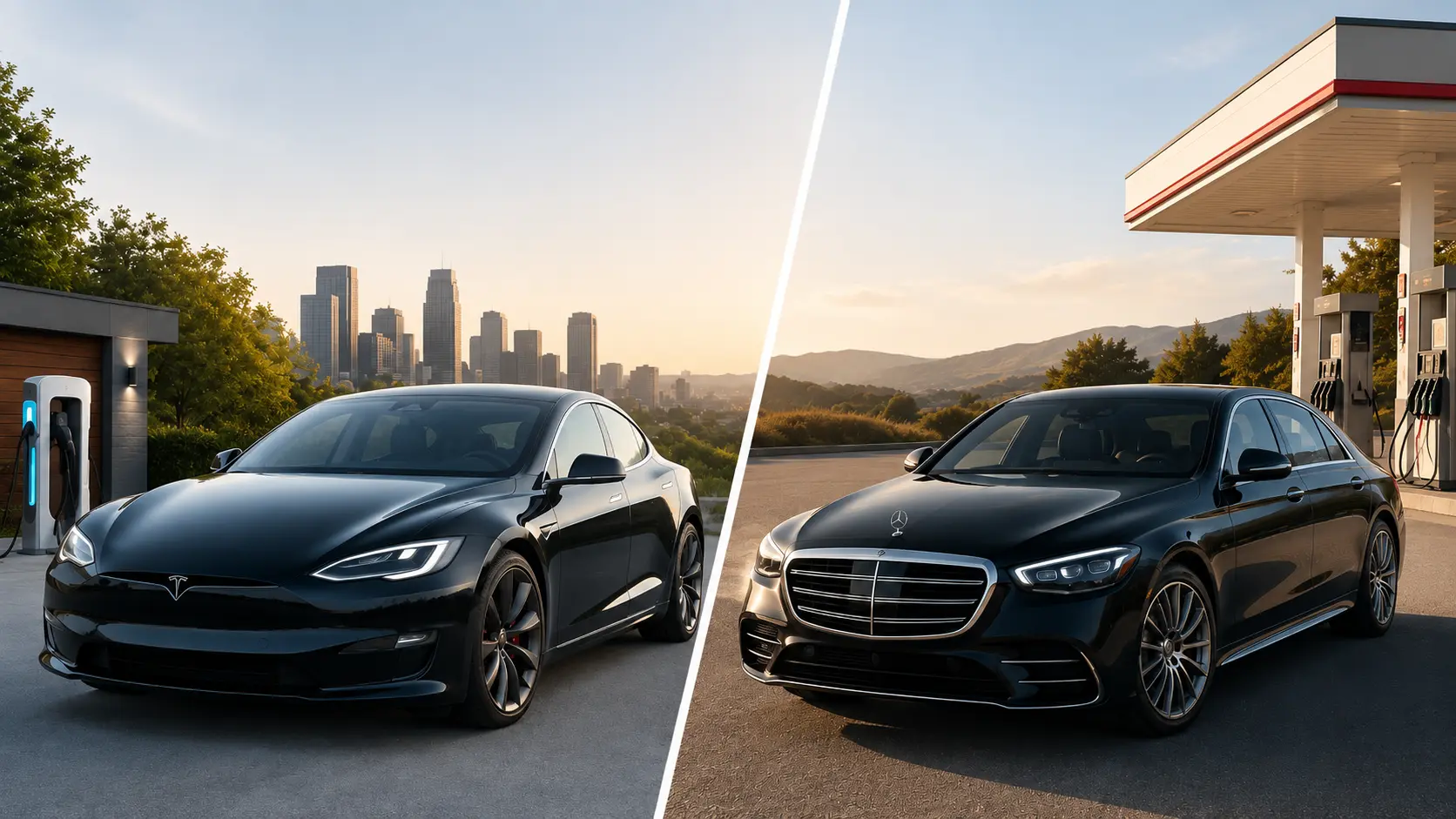
Used Luxury EV vs Gas Luxury Car: Which Makes More Sense?
Choosing a used luxury vehicle today is no longer just about the badge, the cabin, or the way the car feels on a test drive. Many shoppers are also trying to decide whether a used luxury EV or a gas luxury car will make more sense in real life. At AutoPro Nashville, shoppers often call 615-377-6101 because they are not just comparing horsepower or features. They are trying to choose the luxury vehicle that will be easier, more enjoyable, and more practical to own.
That decision has become more interesting in the U.S. used market. A used electric luxury car and a gas-powered luxury vehicle can sometimes sit in a similar price range, even though they deliver very different ownership experiences. An EV may appeal to someone who wants quietness, instant response, and modern technology. A gas luxury car may appeal to someone who wants familiar refueling, long-distance confidence, and a more traditional luxury feel.
This is not about EV hype, gas loyalty, or spec-sheet arguments. The better question is simple: which one fits the way you actually live?
Why This Decision Is Different in the Used Market
The used market changes the electric vs gas luxury car conversation because the original sticker price does not always tell the full story.
A luxury EV that felt expensive when new may become much more approachable after depreciation. That can put it in the same shopping range as a gas-powered luxury sedan or SUV, even though the ownership experience is very different.
That is where buyers need to slow down.
Similar Price, Different Ownership
A used luxury EV can look like a strong value at first glance. It may offer a quiet cabin, modern technology, smooth acceleration, and a more futuristic driving experience for less than many buyers expect.
On paper, that can feel like the smarter move.
But price alone does not make a vehicle the right choice. With a used luxury EV, you still need to think about charging access, range confidence, warranty coverage, software age, battery-related information, and how the vehicle fits your daily routine.
If those pieces line up, the value can be excellent. If they do not, the vehicle may feel less convenient to own than it felt during the test drive.
Familiar Ownership Still Has Value
Gas luxury cars depreciate too, but most buyers understand that ownership pattern better. Refueling is quick. Long trips are familiar. Service history, mileage, condition, and maintenance records are easier for many shoppers to evaluate because the experience feels more traditional.
That does not automatically make a gas luxury car better. It just means the ownership rhythm is more familiar.
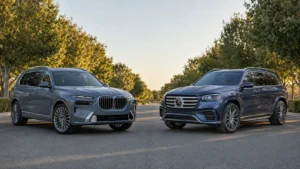
A gas-powered S-Class, 7 Series, Panamera, Range Rover, Escalade, GLS, or X7 may not feel as futuristic as a luxury EV, but it may fit a buyer’s life with less adjustment, especially if road trips, quick refueling, or unpredictable driving are part of the routine.
The decision should not come down to which vehicle has the lower price today. It should come down to whether the ownership experience behind that price fits the way you drive, travel, park, refuel, and live.
The same lifestyle-first thinking also applies when comparing larger vehicles, which is why our used luxury SUV buying guide focuses on how different luxury SUVs actually fit daily life.
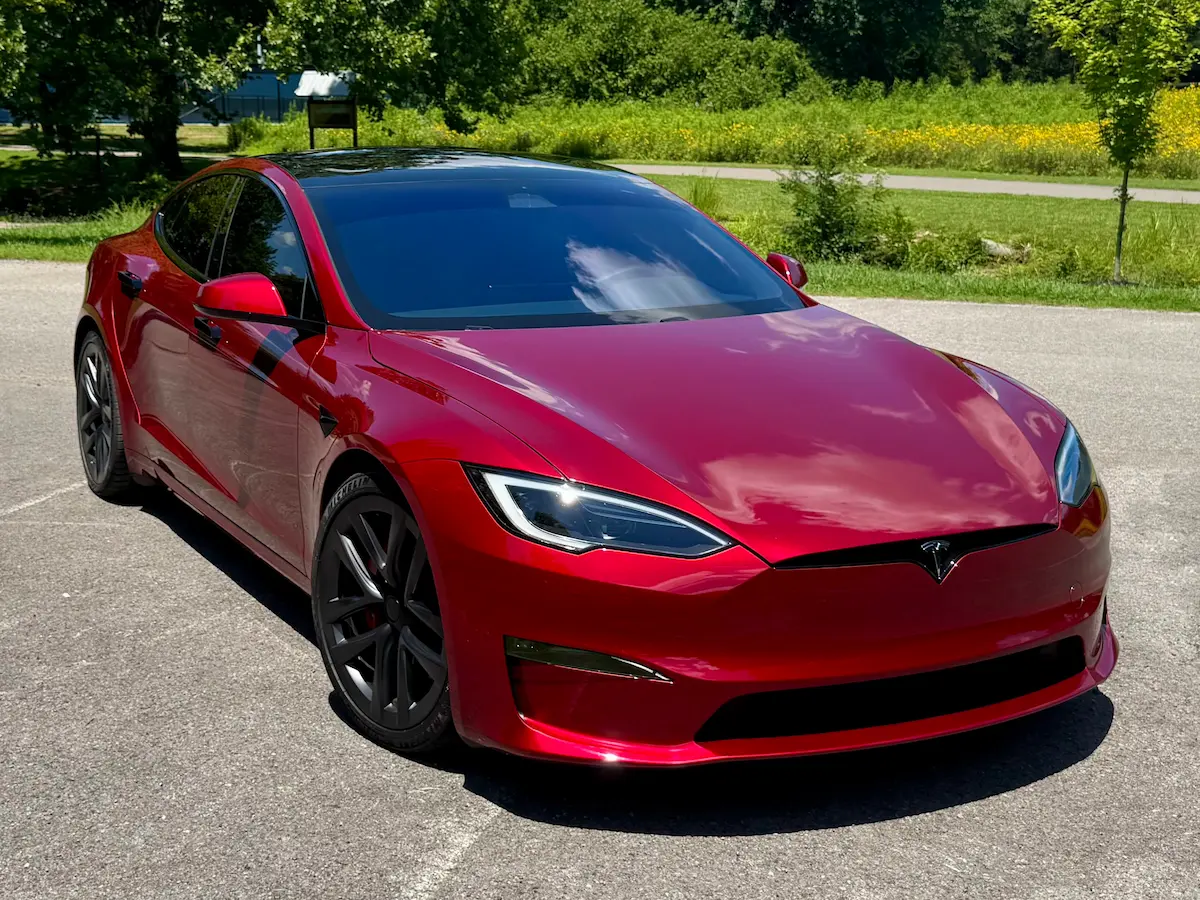
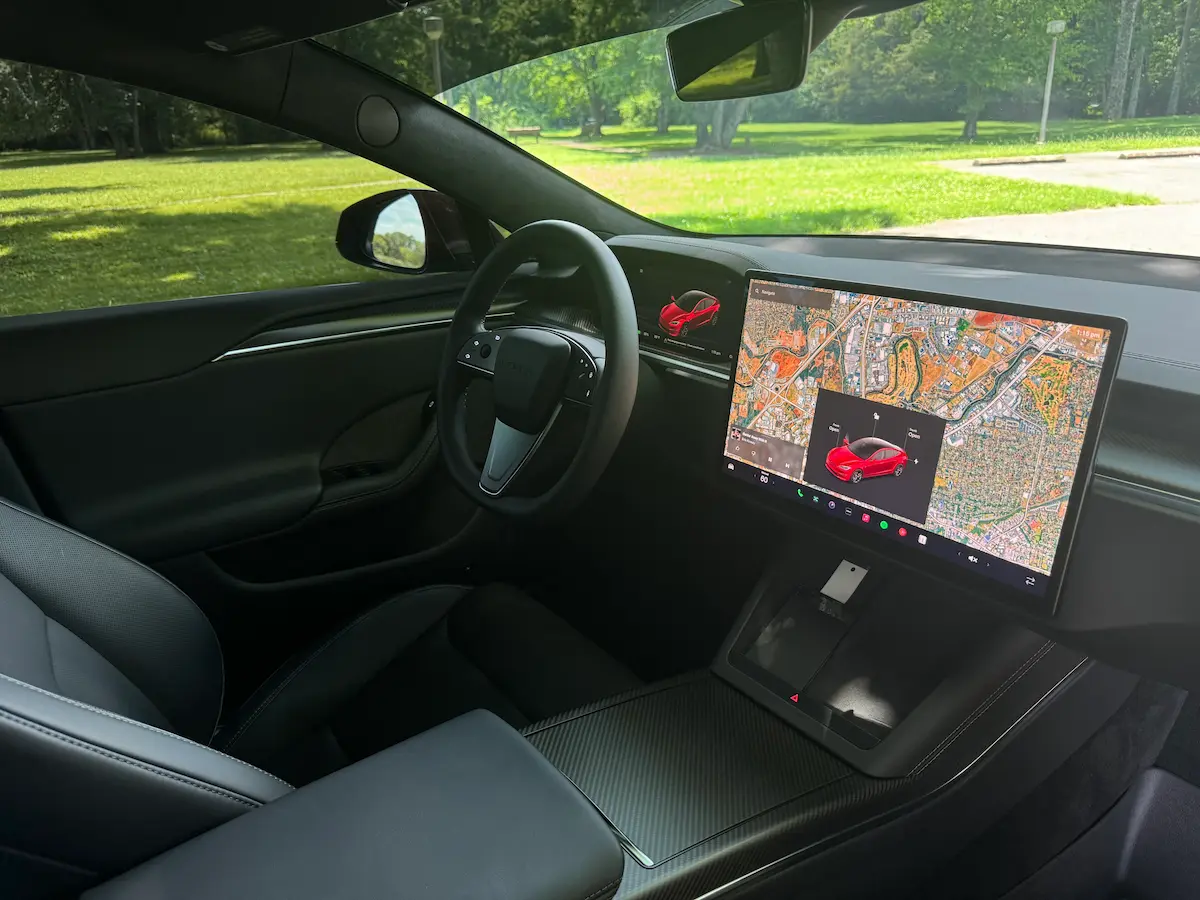
The Real Difference Is Lifestyle, Not Just Fuel Type
The biggest difference between a used luxury EV and a gas luxury car is not only what powers the vehicle. It is how the vehicle fits into your routine.
A luxury EV changes the rhythm of ownership. Instead of stopping for gas when the tank gets low, charging becomes part of your normal schedule. If you can plug in at home overnight, that can feel very convenient. You start the next day with usable range, avoid regular fuel stops, and enjoy a quiet, smooth vehicle for daily driving.
A gas luxury car keeps things more familiar. You drive, stop for fuel when needed, and keep going in a few minutes. There is less planning involved, especially if your schedule changes often, your driving is unpredictable, or you take longer trips without much notice.
That is where the decision becomes personal. For some buyers, home charging makes EV ownership feel easy and natural. The vehicle fits into the background of daily life. You park it, charge it, and use it the next day without thinking much about fuel stops.
For other buyers, that same routine may feel like an adjustment. If charging is not easy at home or work, a luxury EV can require more planning than expected. In that case, the convenience advantage may shift back toward a gas luxury car.
At this stage, the real issue is not electric or gas. It is whether the ownership rhythm feels natural day after day.
When a Used Luxury EV Makes More Sense
A used luxury EV makes the most sense when charging fits easily into your normal routine. For most buyers, that starts with home charging. If you can plug in overnight, the ownership experience becomes much easier to live with. The vehicle charges while you sleep, and most daily driving can happen without relying much on public charging.
That setup works especially well for predictable routines. If most of your driving is local or regional, an EV can feel simple and comfortable to own. Commuting, school drop-offs, errands, client meetings, and everyday driving can all fit well when the vehicle’s range comfortably covers your normal use.
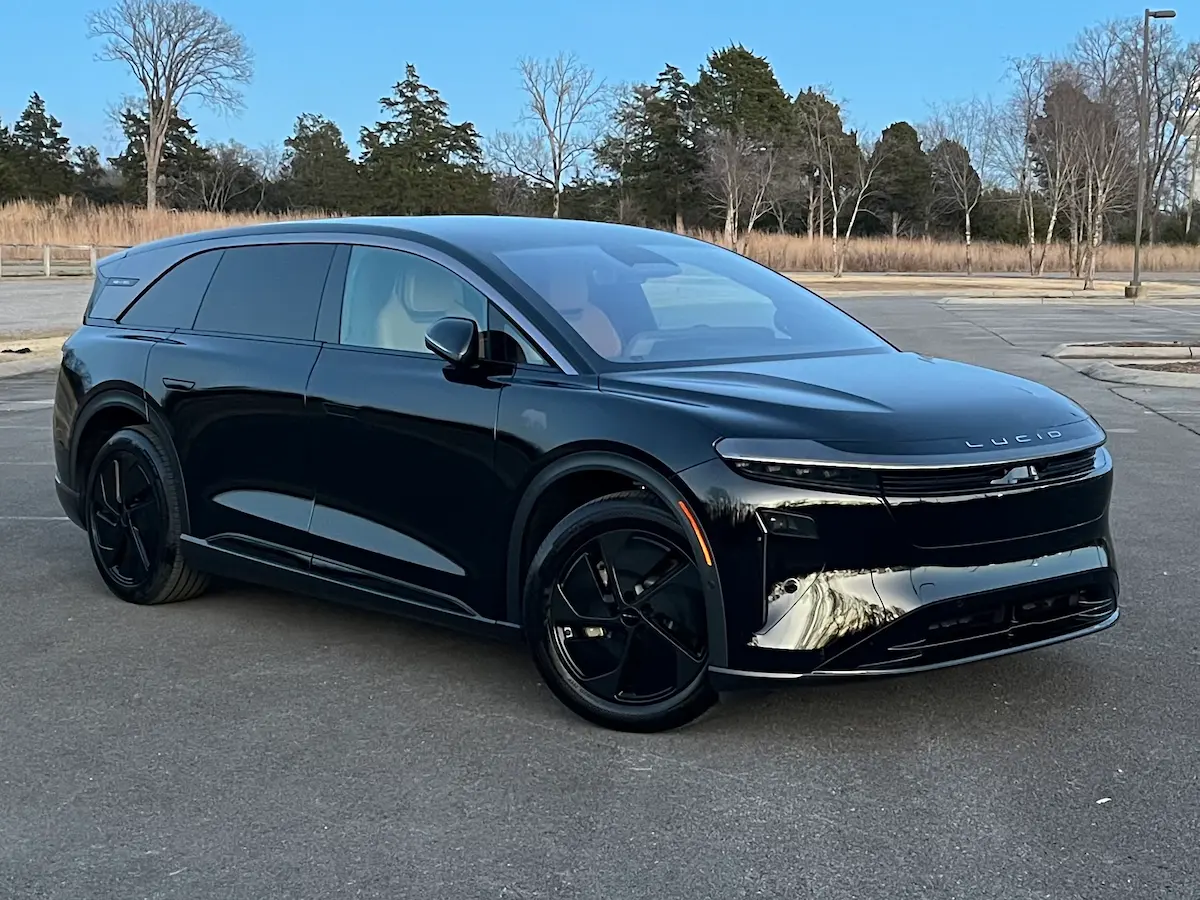
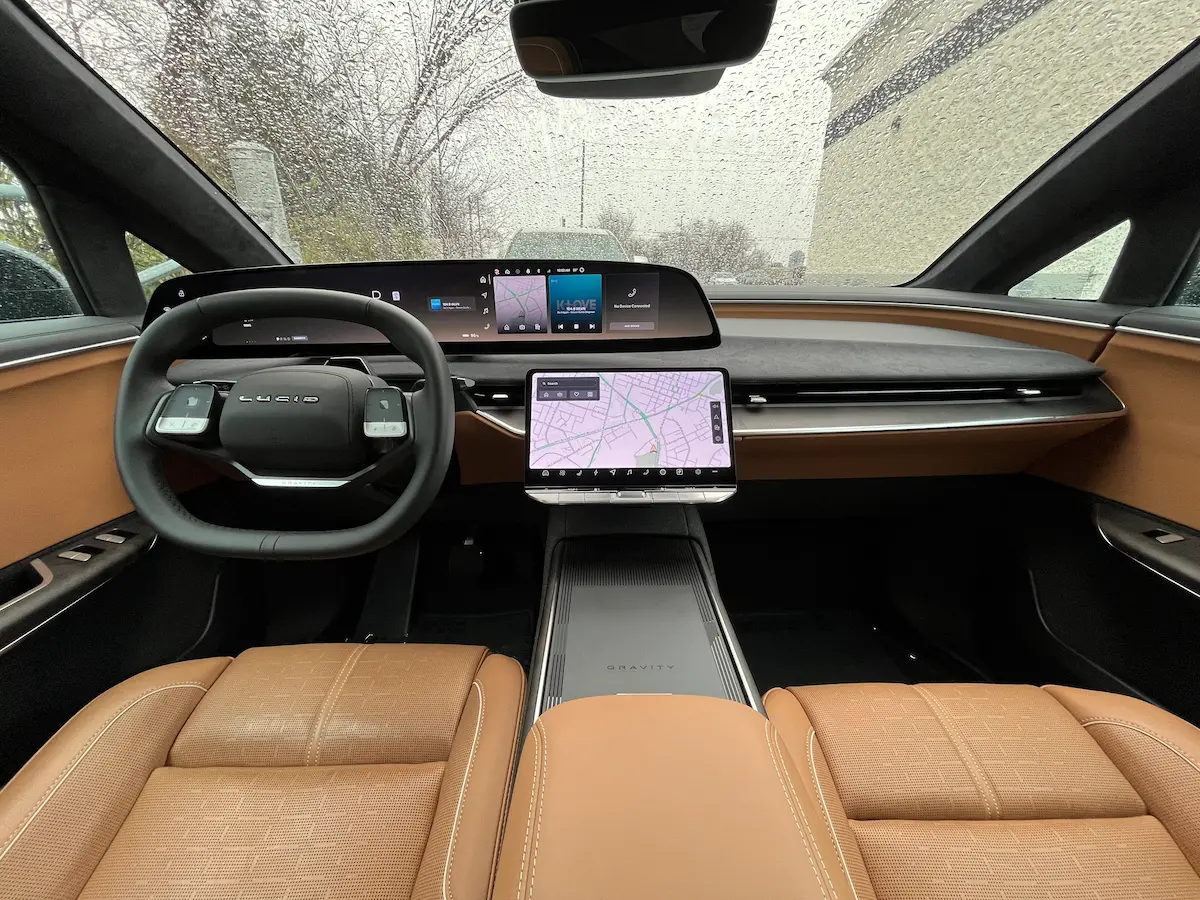
A used luxury EV may also be the right fit if you value quietness, smooth acceleration, and modern technology. Vehicles like the Tesla Model S, BMW i7, Mercedes-Benz EQS, Porsche Taycan, Audi Q8 e-tron, or Lucid Air show how different electric luxury can feel from a traditional gas-powered luxury car. The cabin can feel calm, acceleration can feel immediate, and the lack of engine vibration can make everyday driving feel more relaxed.
A used luxury EV may be a strong fit if:
- You can charge at home or at work.
- Most of your driving is local, regional, or predictable.
- You like quiet, smooth acceleration.
- You value modern cabin technology.
- You are comfortable planning longer trips when needed.
- You are reviewing battery-related information and warranty coverage carefully.
- You want a luxury vehicle that feels noticeably different from a traditional gas car.
The key is being honest about your daily routine. A used EV can be a great fit when your lifestyle supports it. But if charging is inconvenient, the ownership experience can become more complicated than the vehicle itself deserves.
For shoppers considering a larger electric luxury sedan, our used Tesla Model S buying guide goes deeper into trims, range, battery health, and long-term ownership expectations.
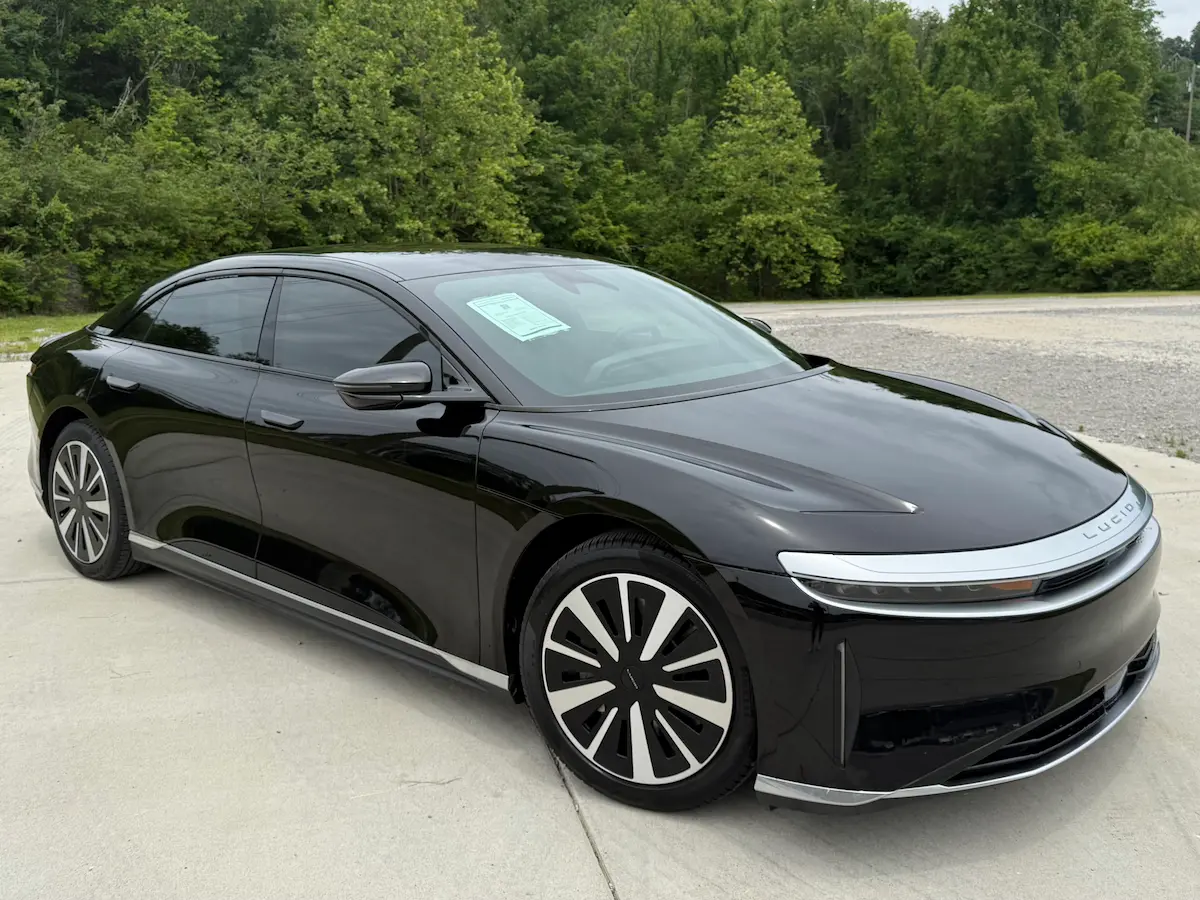
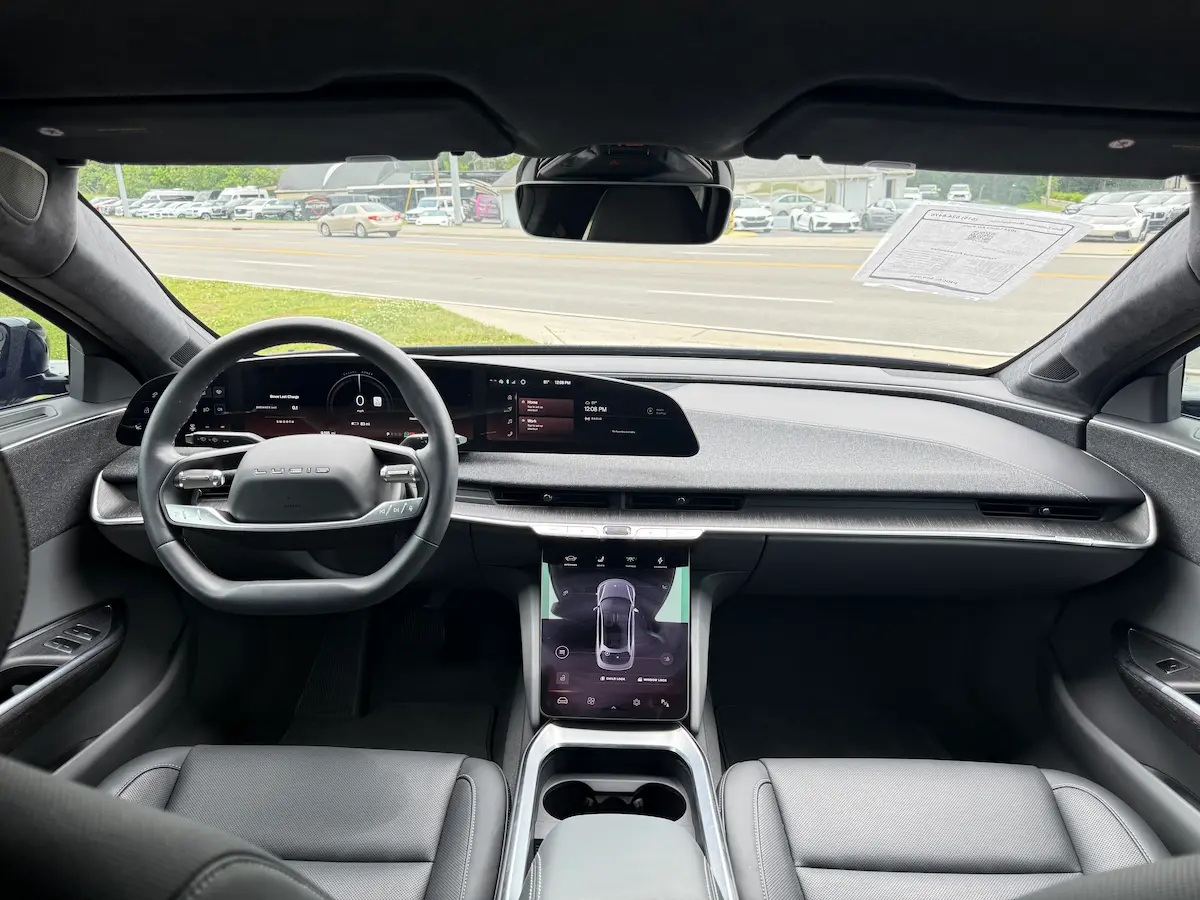
When a Gas Luxury Car Makes More Sense
A gas luxury car still makes a lot of sense for many buyers, especially in the used market. The ownership experience is familiar, flexible, and easy to understand. You can refuel quickly, drive long distances with less planning, and choose from a wide range of luxury sedans, SUVs, performance cars, and grand touring models.
That matters if you take frequent road trips, travel on short notice, or do not have reliable home charging. A gas luxury vehicle usually does not ask you to change your routine very much. You can own it the way you have owned other vehicles, but with a higher level of comfort, performance, presence, and refinement.
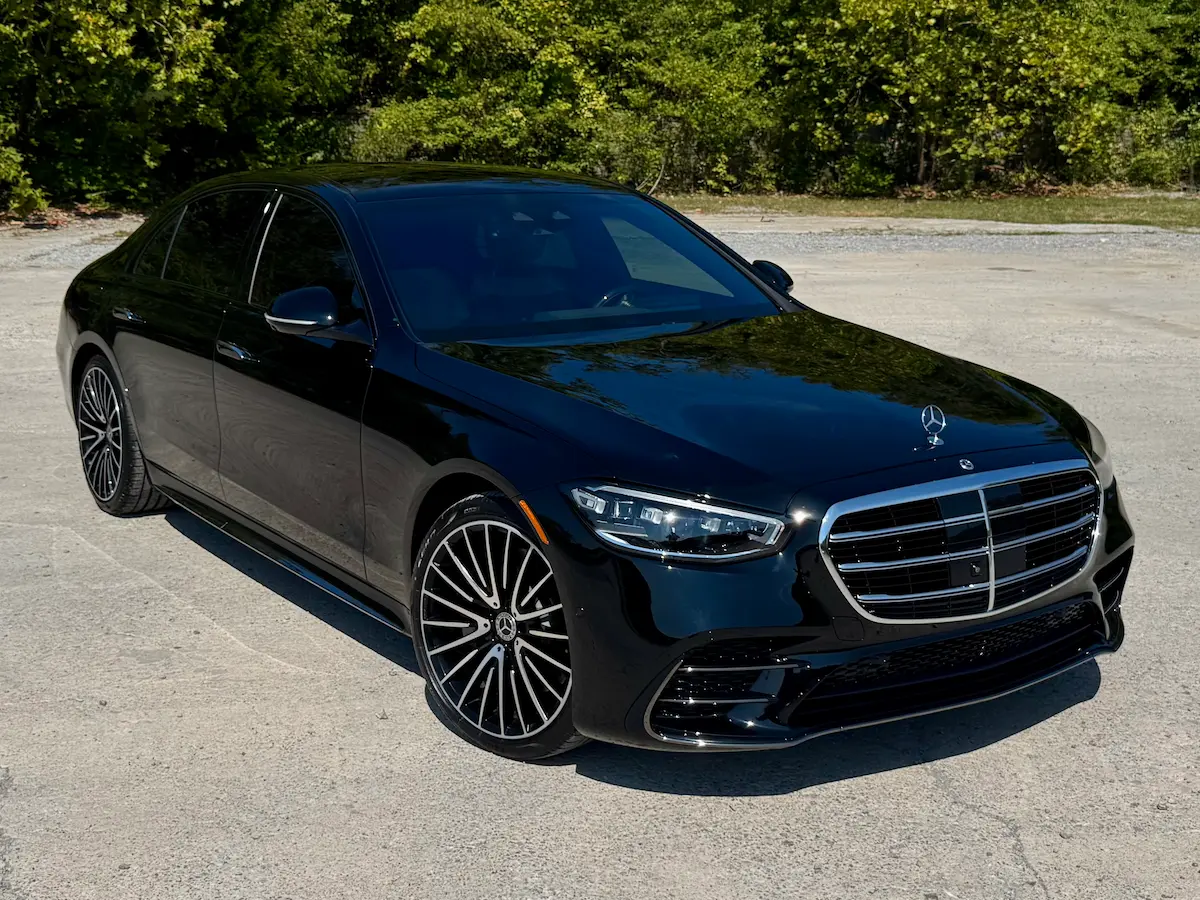
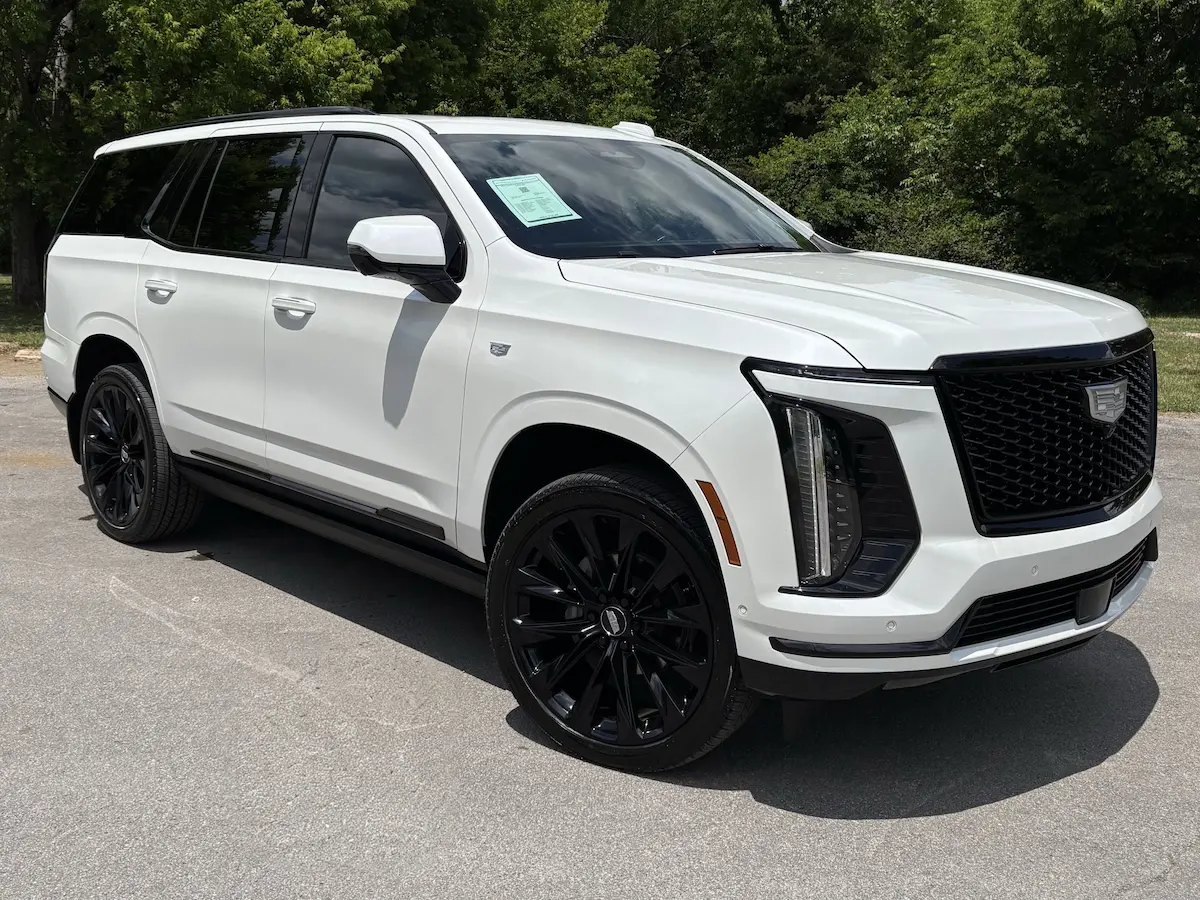
Gas luxury cars also give buyers more variety. If you want a full-size luxury SUV, a flagship sedan, a performance sedan, a grand touring car, or a more traditional ultra-luxury experience, the gas market still offers a broader selection. A Mercedes-Benz S-Class, BMW 7 Series, Porsche Panamera, Lexus LS, Range Rover, Cadillac Escalade, Mercedes-Benz GLS, BMW X7, or Audi A8 can deliver a kind of luxury that feels very different from an EV.
A gas luxury car may be the smarter fit if:
- You do not have reliable home charging.
- You take frequent long-distance trips.
- You want quick refueling with minimal planning.
- You prefer traditional luxury feel and engine character.
- You want a wider selection of models and body styles.
- You are not comfortable depending on public charging.
- You want a familiar service and ownership experience.
Gas luxury vehicles should not be treated as outdated simply because EVs are newer. For many buyers, gas still offers the easier, more flexible, and more confidence-inspiring ownership rhythm.
For a closer look at the traditional flagship sedan experience, our Mercedes-Benz S-Class review explains why the S-Class remains a benchmark for comfort, refinement, and luxury presence.
Charging vs Refueling: The Real Daily-Life Difference
Charging vs refueling is one of the biggest practical differences between a used luxury EV and a gas luxury car. It affects daily ownership more than most horsepower numbers, screen sizes, or feature lists.
A luxury EV can feel very convenient when charging is easy. A gas luxury car can feel easier when you want the fastest and most familiar way to keep moving. The right answer depends on where you live, how you drive, and how much adjustment you are willing to make.
For shoppers who want a simple way to think through charging access, range needs, and longer trips, AAA’s EV buying questions can be a helpful outside resource.
Home Charging Changes the EV Experience
If you can charge at home, a used luxury EV becomes much easier to live with. Instead of making separate fuel stops, you can plug in when you park and start the next day with enough range for your usual driving.
For many luxury buyers, that is the ideal EV setup. The vehicle feels quiet, smooth, and modern, while charging mostly stays in the background. You are not planning your day around the car. The car simply fits into your day.
Public Charging Requires More Honesty
Public charging can work, but it changes the experience. If you live in an apartment, condo, or area where charging is not easy, a used EV may take more effort than expected.
That does not make a used luxury EV a bad choice. It just means you need to be realistic before buying. Where would you charge most often? How often would you rely on public chargers? Would that still feel convenient after the excitement of the vehicle wears off?
If public charging becomes your main charging plan, EV ownership may feel less effortless. You may need to think more about timing, location, and range than you would with a gas luxury car.
Gas Refueling Still Has a Convenience Advantage
Gas refueling is still faster and more familiar. For buyers who drive long distances, travel on short notice, or simply do not want to think about charging, that convenience matters.
This is where a gas luxury car keeps a clear advantage. You do not have to plan around charging access or wonder whether a stop fits your schedule. You refuel and keep going.
The honest takeaway is simple: EV ownership works best when charging is easy to build into your life. Gas ownership works best when you want the simplest fueling experience with the least adjustment.
Comfort, Technology, and Driving Feel
This is where the choice becomes more personal.
Luxury EVs often feel quiet, smooth, and calm in a way that even refined gas cars may not. Without engine noise or vibration, the cabin can feel more isolated from the road. For commuting, errands, and everyday driving, that quietness can become a major part of the appeal.
Acceleration feels different too. Power arrives instantly, so a luxury EV can feel quick and effortless without needing to be driven hard. Pulling away from a stop, merging onto the highway, or passing in traffic can feel smooth and confident.
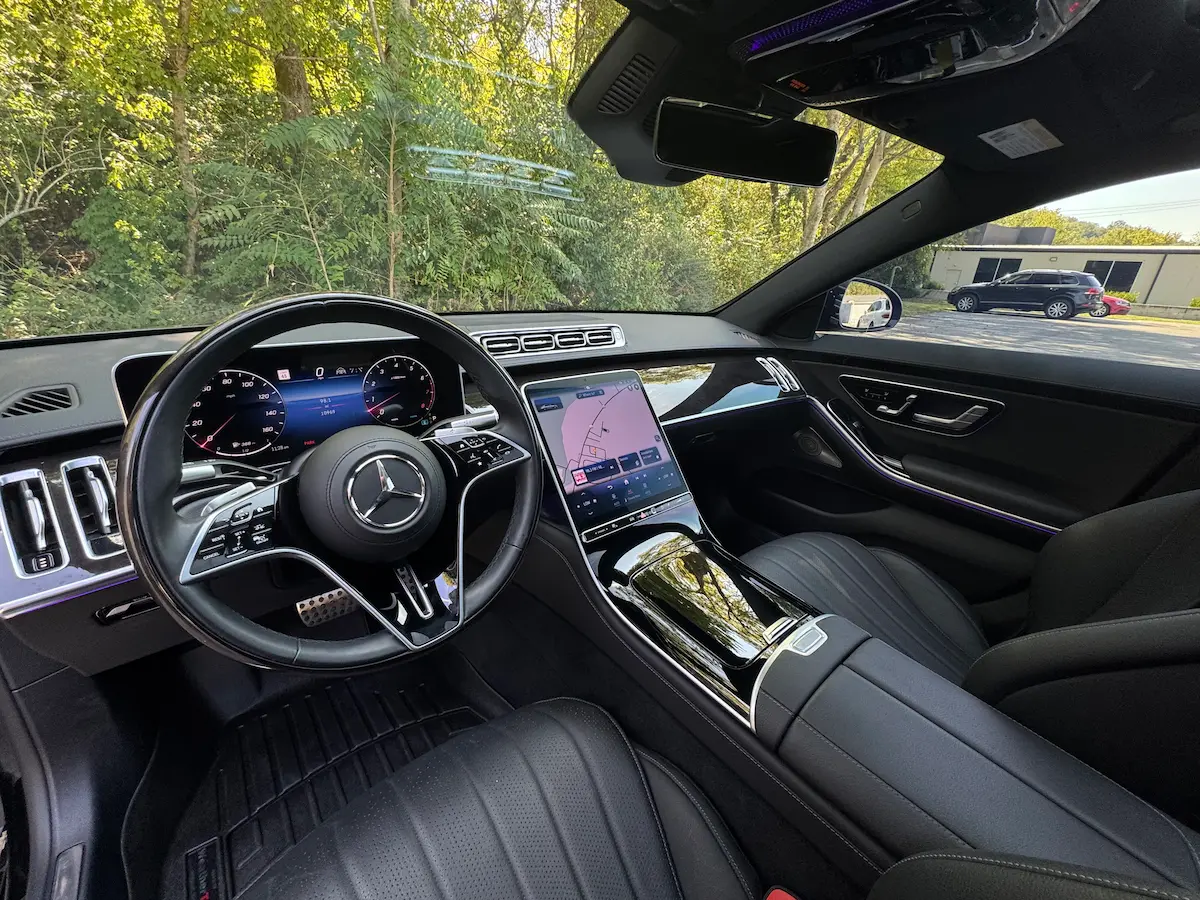
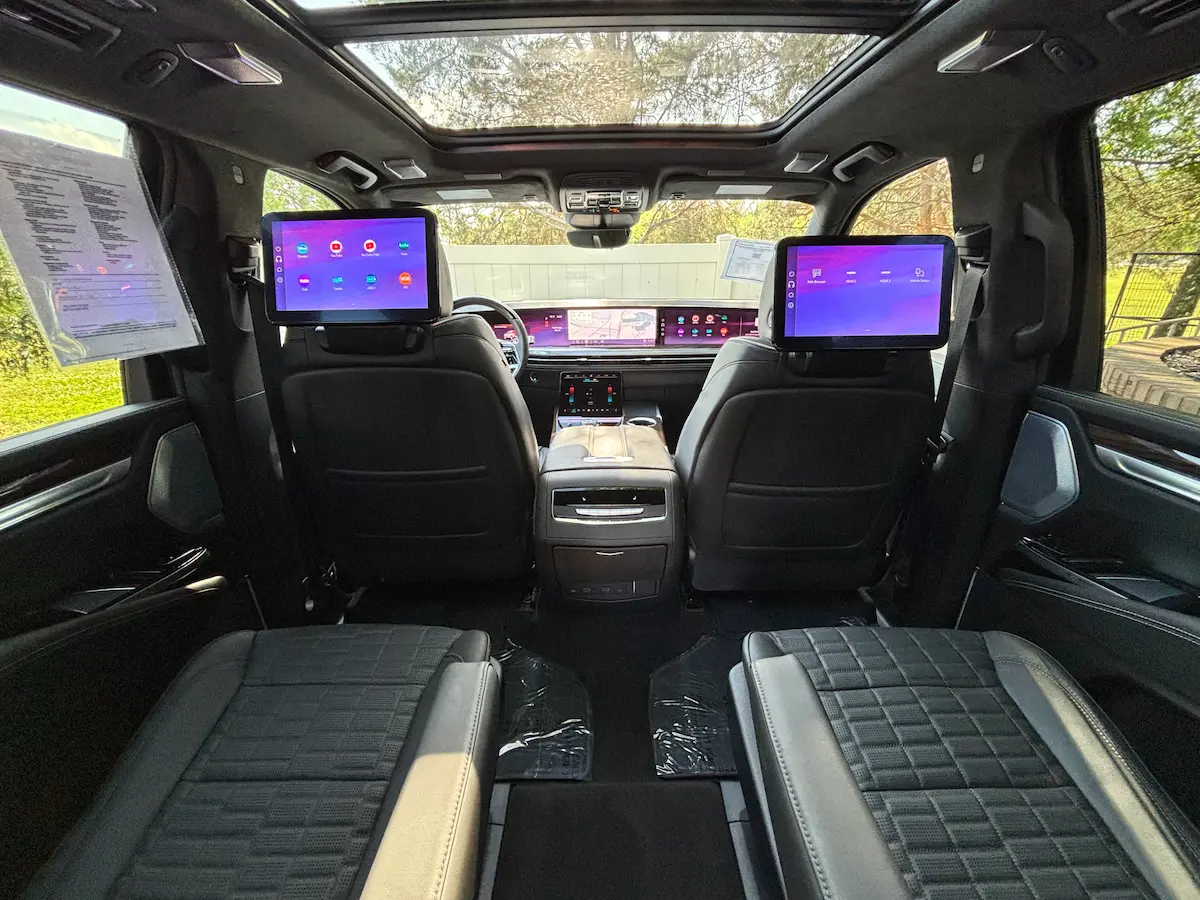
Gas luxury cars offer a different kind of experience. Many buyers still prefer the sound, response, and character of a traditional engine. A well-built gas luxury sedan or SUV can feel rich, familiar, and more connected. The cabin may also feel less screen-focused and more tactile, which some buyers prefer.
Technology is another part of the decision, especially in the used market. Many luxury EVs rely heavily on large screens, software, and digital controls. That can feel modern and impressive, but buyers should make sure the interface still feels current and easy to use.
Gas luxury cars can be advanced as well, but they often feel more traditional. For some buyers, that feels less futuristic. For others, that is exactly the appeal.
A used luxury EV can feel quiet, clean, and modern. A gas luxury car can feel refined, familiar, and more emotionally connected. The better choice depends on what kind of luxury experience you want every day.
Depreciation, Value, and Long-Term Confidence
Depreciation is one reason used luxury EVs are getting more attention. A used electric luxury car can offer a lot of vehicle for the money, especially if you want a quiet cabin, modern technology, and strong performance without paying new-car pricing.
But a lower price should not be the only reason to buy.
For buyers who want a deeper checklist on the electric side, Consumer Reports’ guide to buying a used electric vehicle is a helpful resource for understanding battery condition, warranty questions, and used-EV ownership considerations.
Value Is More Than the Lower Price
A lower used price can be an opportunity, but it should also make you ask better questions. Does the range fit your driving? Is there remaining warranty coverage? Does the technology still feel current? Is battery-related information available? Does the vehicle actually fit your routine?
Gas luxury cars have their own value questions too. They also depreciate, and ownership costs can vary based on the model, service history, condition, tires, brakes, and previous care. A gas luxury car is not automatically the safer choice. It is simply more familiar for many buyers to evaluate.
What to Review Before Buying
For EVs, pay close attention to:
- Range confidence for your real driving habits
- Remaining battery warranty, when applicable
- Battery-health-related information, when available
- Charging history, when available
- Tire condition
- Software functionality
- Vehicle history and previous ownership patterns
For gas luxury vehicles, pay close attention to:
- Service records
- Maintenance history
- Tire and brake condition
- Mileage and previous use
- Ownership quality
- Warranty coverage, when available
- Overall mechanical and cosmetic condition
In both cases, the individual vehicle matters more than the category. A well-cared-for luxury EV can be a better buy than a neglected gas luxury car. A well-documented gas luxury car can be a better buy than an EV that does not fit your lifestyle.
What Buyers Often Get Wrong
Many shoppers treat this like a simple EV vs gas debate. It is not. It is a used luxury ownership decision.
One common mistake is buying a used luxury EV just because the price looks low. A lower price can be attractive, but the vehicle still needs to match your charging access, range needs, daily routine, and comfort with EV ownership.
Another mistake is assuming an EV will be easy to own without home charging. Some buyers can make that work, but it usually means planning around public chargers instead of simply using the car and moving on.
Gas buyers can misjudge the decision too. Some dismiss used luxury EVs because they are unfamiliar. For the right buyer, a used EV can be quiet, smooth, quick, and convenient when charging fits naturally into the day.
It is also too simple to assume every EV will be cheaper to own. EVs may avoid some traditional maintenance items, but they still have tires, brakes, software, electronics, cabin technology, and vehicle-specific ownership considerations. Luxury vehicles are still luxury vehicles.
The same logic applies to gas luxury cars. Engine character can be a real part of the appeal, but condition still matters. A beautiful gas luxury sedan or SUV with poor history, worn tires, deferred maintenance, or the wrong configuration may not be the smart buy.
The biggest mistake is choosing the vehicle that feels most impressive during the test drive instead of the one that fits real ownership. The best used luxury car is the one you will still enjoy living with months later.
The Simple Decision Filter
Before choosing between a used luxury EV and a gas luxury car, step away from the badge and think about how the vehicle will actually fit your life.
Start with charging. If you can charge at home, a used luxury EV becomes much easier to consider. If you cannot, be honest about how often you would need public charging and whether that would still feel convenient after the first few weeks.
Then look at your driving routine. If most of your driving is local, regional, and predictable, an EV may fit very well. If your schedule changes often or regularly includes long distances, a gas luxury car may be easier to live with.
The feel of the vehicle matters too. If quietness, smooth acceleration, and modern technology are high priorities, a used luxury EV may feel more satisfying. If you enjoy engine character, traditional controls, and a more familiar cabin feel, a gas luxury car may feel more natural.
Finally, look closely at the individual vehicle. Fuel type does not replace condition. History, mileage, warranty coverage, service records, tire condition, options, ownership quality, and overall care all matter.
The simplest guidance is this:
Choose a used luxury EV if you can charge easily, drive mostly predictable routes, like quiet modern technology, and feel comfortable with EV ownership habits.
Choose a gas luxury car if you road trip often, do not have home charging, prefer quick refueling, want broader model choice, or want a more familiar ownership experience.
What Comes Next
Once you know whether a used luxury EV or gas luxury car fits your lifestyle better, shopping becomes much more focused. The decision is no longer just electric vs gas. It becomes about finding the right individual vehicle.
That is where the details matter. Condition, mileage, configuration, warranty coverage, service history, options, battery-related information, and previous care can change the value quickly. Two vehicles that look similar online can feel very different once you look closer.
The best approach is to start with your lifestyle, then evaluate the specific car. A used luxury EV can be a smart and rewarding choice when charging access and daily driving line up. A gas luxury car can still be the better fit when range flexibility, quick refueling, and familiar ownership matter more.
When you are ready to compare real options, browsing current high-end pre-owned inventory can help connect the decision to actual vehicles without rushing the process.
For many buyers, the right answer is not about chasing the newest technology or holding onto the most traditional option. It is about choosing the luxury vehicle that fits the way they actually live.
Is a used luxury EV worth it?
A used luxury EV can be worth it if charging fits your lifestyle and the vehicle has strong range, condition, and warranty confidence. It can offer a quiet cabin, instant acceleration, modern technology, and strong value after depreciation. The key is making sure the car works for your daily routine, not just that the price looks attractive.
Should I buy a used EV if I do not have home charging?
You can, but you should be honest about the inconvenience. A used EV is much easier to own when you can charge at home or at work. If you rely mostly on public charging, you will need to plan more carefully around charging locations, timing, and range.
Do used luxury EVs depreciate faster than gas luxury cars?
Many luxury EVs can depreciate sharply from their original price, which can create strong used-market value. But depreciation is not automatically good or bad. A lower price should lead you to ask better questions about range, battery-related information, warranty coverage, software, condition, and whether the vehicle fits your lifestyle.
Are used luxury EVs cheaper to maintain?
Used luxury EVs may avoid some traditional maintenance items, such as oil changes, but that does not mean they are maintenance-free. Tires, brakes, suspension, software, electronics, cabin technology, and EV-specific systems still matter. A used luxury EV should still be inspected carefully before purchase.
Which is better: a used luxury EV or a gas luxury car?
Neither is automatically better. A used luxury EV makes more sense if you can charge easily, drive mostly predictable routes, and want quiet modern luxury. A gas luxury car makes more sense if you want quick refueling, long-distance flexibility, broader model choice, and a more familiar ownership experience.